Showing posts with label systems. Show all posts

Wednesday, May 30, 2018

Transportation Systems in Buildings


Transportation Systems in Buildings
CIBSE Guide D


Transient Airflow in Building Drainage Systems


Transient Airflow in Building Drainage Systems
2010 |  362 pages | PDF | 8,8 MB

Giving you the first comprehensive presentation of the ground breaking research undertaken at Heriot Watt University, with Research Council and industrial funding, this book brings a new perspective to the design of building drainage and vent systems. It provides the building services community with clear and verifiable design methods that will be robust enough to meet challenges such as climate change and water conservation; population migration to the mega cities of the developing world, and the consequent pressures of user concentration; the rise of the prestige building and the introduction of new appliances and control strategies. 

These all combine to make traditional codified design guidance insufficient. Many assumptions in existing codes defining the entrained airflows within building drainage vent systems cannot be theoretically supported, so designers concerned with these systems need analysis and simulation capabilities which are at least as reliable as those enjoyed by other building services practitioners.

The Method of Characteristics solution techniques which are well established in the pressure surge field are now used to provide solutions for drainage designers. The material is applied to a whole range of abstract scenarios then to a series of real world applications including the forensic modelling of the SARS virus spread within Amoy Gardens in 2003 and the refurbishment of the O2 Dome. 

Applications to specialised services, including underground station drainage and highly infectious disease treatment facilities are discussed and demonstrated, alongside the use of design and simulation techniques in support of product development.

Aimed at both professional and academic users, this book serves both as a design aid and as a core text for specialist masters courses in public health and building services engineering.
 

Download : Oboom / Mega
 

Tuesday, May 29, 2018

Components and Systems : Modular Construction. Design. Structure. New Technologies


Components and Systems : Modular Construction. 
Design. Structure. New Technologies

Construction systems reduced to the smallest possible number of identical elements have long been used by architects to build structures as well as dismantle and change them as quickly, efficiently, and economically as possible. 

Think of the architecture of the nomads, the Crystal Palace designed by the architect John Paxton for the London Worlds Fair of 1851, or the modern construction systems of the nineteenth and twentieth centuries in steel, concrete, and wood.

Coupled with modern digital planning and production methods, modular precast construction systems that are adaptable for many combinations and capable of being combined with one other will play an increasingly important role in architecture in the future.

The volume Components and Systems offers an in-depth and clearly organized presentation of the various types of precast building components from semifinished products to building with components, open and closed systems, and skeleton and panel construction all the way to spatial cell constructions. 

The systems are accompanied by detailed drawings and color photographs. Discussions of transporting and assembling the various systems round off the topic and make this book an indispensable practical companion.
 

Wednesday, March 14, 2018

Green Roof Systems


Green Roof Systems :
A Guide to the Planning, Design and Construction of Building Over Structure

Download : Oboom / mega

Sunday, September 18, 2016

Green Roof Systems


Green Roof Systems :
A Guide to the Planning, Design and Construction of Building Over Structure


Sunday, July 21, 2013

Components and Systems : Modular Construction. Design. Structure. New Technologies


Components and Systems : 
Modular Construction. Design. Structure. New Technologies
Gerald Staib

Construction systems reduced to the smallest possible number of identical elements have long been used by architects to build structures as well as dismantle and change them as quickly, efficiently, and economically as possible. Think of the architecture of the nomads, the Crystal Palace designed by the architect John Paxton for the London Worlds Fair of 1851, or the modern construction systems of the nineteenth and twentieth centuries in steel, concrete, and wood.Coupled with modern digital planning and production methods, modular precast construction systems that are adaptable for many combinations and capable of being combined with one other will play an increasingly important role in architecture in the future.The volume Components and Systems offers an in-depth and clearly organized presentation of the various types of precast building components from semifinished products to building with components, open and closed systems, and skeleton and panel construction all the way to spatial cell constructions. The systems are accompanied by detailed drawings and color photographs. Discussions of transporting and assembling the various systems round off the topic and make this book an indispensable practical companion.


Sunday, July 14, 2013

Green Roof Systems : A Guide to the Planning, Design and Construction of Building Over Structure


Green Roof Systems : 
A Guide to the Planning, Design and Construction of Building Over Structure
Susan Weiler
Publication Date: 2009 | Edition: 1

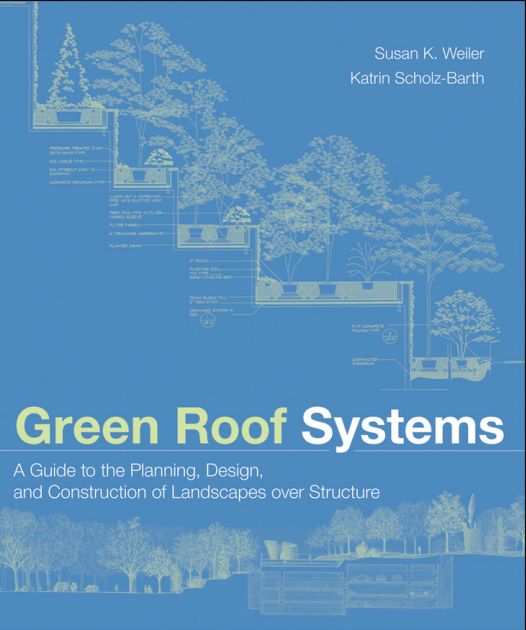
Green Roof Systems goes beyond the fashionable green roof movement and provides solid information on building accessible space, often as important public space, over structure. It offers brief coverage of the entire process, including planning and collaboration, and focuses on the technical aspects of these roof systems, their components, and their applications.

Thursday, June 20, 2013

Transient Airflow in Building Drainage Systems


Transient Airflow in Building Drainage Systems
John Swaffield, 
2010 |  | 362 pages | PDF | 8,8 MB

Giving you the first comprehensive presentation of the ground breaking research undertaken at Heriot Watt University, with Research Council and industrial funding, this book brings a new perspective to the design of building drainage and vent systems. It provides the building services community with clear and verifiable design methods that will be robust enough to meet challenges such as climate change and water conservation; population migration to the mega cities of the developing world, and the consequent pressures of user concentration; the rise of the prestige building and the introduction of new appliances and control strategies. These all combine to make traditional codified design guidance insufficient. Many assumptions in existing codes defining the entrained airflows within building drainage vent systems cannot be theoretically supported, so designers concerned with these systems need analysis and simulation capabilities which are at least as reliable as those enjoyed by other building services practitioners.

The Method of Characteristics solution techniques which are well established in the pressure surge field are now used to provide solutions for drainage designers. The material is applied to a whole range of abstract scenarios then to a series of real world applications including the forensic modelling of the SARS virus spread within Amoy Gardens in 2003 and the refurbishment of the O2 Dome. Applications to specialised services, including underground station drainage and highly infectious disease treatment facilities are discussed and demonstrated, alongside the use of design and simulation techniques in support of product development.

Aimed at both professional and academic users, this book serves both as a design aid and as a core text for specialist masters courses in public health and building services engineering.

The Building Environment : Active and Passive Control Systems, 3rd Edition


The Building Environment : Active and Passive Control Systems, 3rd Edition
Vaughn Bradshaw 

To capitalize on today's rapidly evolving, specialized technologies, architects, designers, builders, and contractors work together to plan the mechanical and electrical equipment that controls the indoor environment of a building. The Building Environment: Active and Passive Control Systems, Third Edition helps you take advantage of design innovations and construction strategies that maximize the comfort, safety, and energy efficiency of buildings.

From active HVAC systems to passive methods, lighting to on-site power generation, this updated edition explains how to strategically plan for and incorporate effective, efficient systems in today's buildings. It covers the underlying thermal theories and thermodynamic principles and focuses on design that enhances the building environment and minimizes the impact on the world's environment.

Saturday, February 16, 2013

Transient Airflow in Building Drainage Systems


Transient Airflow in Building Drainage Systems
John Swaffield,
Sp-n Press | 2010 | 362 pages | PDF | 8,8 MB

Giving you the first comprehensive presentation of the ground breaking research undertaken at Heriot Watt University, with Research Council and industrial funding, this book brings a new perspective to the design of building drainage and vent systems. It provides the building services community with clear and verifiable design methods that will be robust enough to meet challenges such as climate change and water conservation; population migration to the mega cities of the developing world, and the consequent pressures of user concentration; the rise of the prestige building and the introduction of new appliances and control strategies. These all combine to make traditional codified design guidance insufficient. Many assumptions in existing codes defining the entrained airflows within building drainage vent systems cannot be theoretically supported, so designers concerned with these systems need analysis and simulation capabilities which are at least as reliable as those enjoyed by other building services practitioners.

The Method of Characteristics solution techniques which are well established in the pressure surge field are now used to provide solutions for drainage designers. The material is applied to a whole range of abstract scenarios then to a series of real world applications including the forensic modelling of the SARS virus spread within Amoy Gardens in 2003 and the refurbishment of the O2 Dome. Applications to specialised services, including underground station drainage and highly infectious disease treatment facilities are discussed and demonstrated, alongside the use of design and simulation techniques in support of product development.

Aimed at both professional and academic users, this book serves both as a design aid and as a core text for specialist masters courses in public health and building services engineering.


Tuesday, February 5, 2013

The Building Environment : Active and Passive Control Systems


The Building Environment : Active and Passive Control Systems, 3rd Edition
Vaughn Bradshaw

To capitalize on today's rapidly evolving, specialized technologies, architects, designers, builders, and contractors work together to plan the mechanical and electrical equipment that controls the indoor environment of a building. The Building Environment: Active and Passive Control Systems, Third Edition helps you take advantage of design innovations and construction strategies that maximize the comfort, safety, and energy efficiency of buildings.

From active HVAC systems to passive methods, lighting to on-site power generation, this updated edition explains how to strategically plan for and incorporate effective, efficient systems in today's buildings. It covers the underlying thermal theories and thermodynamic principles and focuses on design that enhances the building environment and minimizes the impact on the world's environment.


Thursday, January 31, 2013

Guide to Stability Design Criteria for Metal Structures


Guide to Stability Design Criteria for Metal Structures, 6 edition
Ronald D. Ziemian,
2010 | 1120 pages | PDF | 27,5 MB

The definitive guide to stability design criteria, fully updated and incorporating current research

Representing nearly fifty years of cooperation between Wil ey and the Structural Stability Research Council, the Guide to Stability Design Criteria for Metal Structures is often described as an invaluable reference for practicing structural engineers and researchers. For generations of engineers and architects, the Guide has served as the definitive work on designing steel and aluminum structures for stability. Under the editorship of Ronald Ziemian and written by SSRC task group members who are leading experts in structural stability theory and research, this Sixth Edition brings this foundational work in line with current practice and research.

The Sixth Edition incorporates a decade of progress in the field since the previous edition, with new features including:

Updated chapters on beams, beam-columns, bracing, plates, box girders, and curved girders. Significantly revised chapters on columns, plates, composite columns and structural systems, frame stability, and arches

Fully rewritten chapters on thin-walled (cold-formed) metal structural members, stability under seismic loading, and stability analysis by finite element methods

State-of-the-art coverage of many topics such as shear walls, concrete filled tubes, direct strength member design method, behavior of arches, direct analysis method, structural integrity and disproportionate collapse resistance, and inelastic seismic performance and design recommendations for various moment-resistant and braced steel frames

Complete with over 350 illustrations, plus references and technical memoranda, the Guide to Stability Design Criteria for Metal Structures, Sixth Edition offers detailed guidance and background on design specifications, codes, and standards worldwide.


Tuesday, June 2, 2009

Living Systems - Innovative Materials and Technologies for Landscape Architecture


Living Systems - Innovative Materials and Technologies for Landscape Architecture

By Liat Margolis, Alexander Robinson
Publisher: Birkhäuser Basel
Number Of Pages: 191
Publication Date: 2007-05-29

34 Mo
http://rapidshare.com/files/237727458/Living_Systems_-_Innovative_Materials.rar.html