Showing posts with label Philosophy. Show all posts

Wednesday, July 11, 2018

Colour Perception: Mind and the Physical World


Colour Perception: Mind and the Physical World
2004 | 544 pages | PDF | 5,6 Mb

The last few decades have brought fascinating changes in the way that we think about color and the role that color plays in our perceptual architecture. 

In Colour: Connecting the Mind to the Physical World, leading scholars from cognitive psychology, philosophy, neurophysiology, and computational vision provide an overview of the contemporary developments in our understanding of colors and of the relationship between the 'mental' and the 'physical'. 

With each chapter followed by critical commentaries, the volume presents a lively and accessible picture of the intellectual traditions which have shaped research into color perception.


Monday, July 9, 2018

Beauty and Islam: Aesthetics in Islamic Art and Architecture


Beauty and Islam: 
Aesthetics in Islamic Art and Architecture
2001 | 160 Pages | PDF | 31 MB

Five essays explore aspects of aesthetics in classical Islamic thought in light of contemporary theories, offering new perspectives on Islamic with examples ranging from the Qur'an and the Alhambra to the works of present day artists and philosophers. 

Tracing the roots of Islamic aesthetics back to the works of the philosophers of the Middle Ages such as Avicenna and Averroes, Valerie Gonzalez finds that aesthetic theory in Islam must be seen within the much wider context of parallel thinking on theology, ethics, physics, and metaphysics. 

She balances her analysis of this philosophy (moral, logical, and scientific) of beauty with the equally important analysis of the perceptual experience of beauty.


Wednesday, June 27, 2018

Le Corbusier in Detail


Le Corbusier in Detail
English

This is the first book to give such close attention to Le Corbusier's approach to the making of buildings. It illustrates the ways in which Le Corbusier's details were expressive of his overall philosophical intentions. It is not a construction book in the usual sense- rather it focusses on the meaning of detail, on the ways in which detail informs the overall architectural narrative of a building. Well illustrated and containing several specially prepared scaled drawings it acts as timely reminder to both students and architects of the possibilities inherent in the most small scale tectonic gestures. 

* Lavishly illustrated, with numerous in depth studies this book will be an inspiration to both students and architects
* This is the first book to illustrate Le Corbusier's philosophies through his use of detail 
* So innovative was Le Corbusier's approach to design and so influential has he been on the current generation of architects that his work remains as relevant today as it ever did

Thursday, June 7, 2018

Philosophy of Symbiosis


Philosophy of Symbiosis
 Kisho Kurokawa

Symbiosis, as defined by Kisho Kurokawa, one of Japan's leading architects, is a new way of interpreting today's culture. A philosophy which takes its name from ecological and biological concepts, it puts forward ideals developed from traditional Japanese philosophy and culture, while continually acknowledging the presence of the multivalent, contemporary world. It is a philosophy of "both-and" rather than "either-or", a practice of mix-and-match rather than creation from scratch, an ethic of inclusion rather than exclusion. As such, it is thought to be one of the most essential statements of post-modern culture to date. Kurokawa feels that we will recognize each other's differing personalities while competing and will co-operate while we oppose and criticize each other.

Monday, June 4, 2018

Architectural Philosophy


Architectural Philosophy

Architectural Philosophy is the first book to outline a philosophical account of architecture and to establish the singularity of architectural practice and theory. This dazzling sequence of essays opens out the subject of architecture, touching on issues as wide ranging as the problem of memory and the dystopias of science fiction. 

Arguing for the indissolubility of form and function, Architectural Philosophy explores both the definition of the site and the possibility of alterity. The analysis of the nature of the present and the complex sructure of repetition allows for the possibility of judgement, a judgement that arises from a reworked politics of architecture.
 

Deconstruction - Omnibus Volume


Deconstruction - Omnibus Volume

Deconstruction Omnibus Volume Deconstruction is One of the Most Talked about New Developments in art and architecture today. Neither a movement nor a fully-fledged style, Deconstruction is a major cultural phenomenon that is both a philosophical idiom and a critical methodology, and most recently the basis of an architectural aesthetic. 

Derived from the work of the French philosopher Jacques Derrida, Deconstruction is characterised by an essential distrust of the authenticity of apparent meaning and form and the traditional distinction between the two. 

Beginning with an investigation into the roots and sources of Deconstruction, this pioneer volume brings together Deconstructionist writings and projects from America, Britain, Europe and Japan. 

This omnibus volume, in addition to several specially commissioned articles, draws on issues of Architectural Design and Art & Design magazines as well as the proceedings of an international symposium at the Tate Gallery in London including an exclusive interview with Derrida himself. 

Four sections covering Constructivist Origins, Theory and Philosophy, and Deconstruction in Art and Architecture, edited by Andreas Papadakis, Andrew Benjamin and Catherine Cooke, present the work of the major writers, critics and practitioners of Deconstruction. 

These include Christopher Norris, Peter Eisenman, Bernard Tschumi, Zaha Hadid, Daniel Libeskind, OMA, Morphosis, Coop Himelblau, Charles Jencks, Hiromi Fujii, Geoff Bennington, Mark Wigley, Valerio Adami and many others. 

This book - the first to attempt to locate and define Deconstruction in architecture and the visual arts - explores the subject from a variety of viewpoints, some of which by their nature are experimental or speculative.


Download

Monday, November 11, 2013

Philosophy of Symbiosis - Kisho Kurokawa


Philosophy of Symbiosis - Kisho Kurokawa

Symbiosis, as defined by Kisho Kurokawa, one of Japan's leading architects, is a new way of interpreting today's culture. A philosophy which takes its name from ecological and biological concepts, it puts forward ideals developed from traditional Japanese philosophy and culture, while continually acknowledging the presence of the multivalent, contemporary world. It is a philosophy of "both-and" rather than "either-or", a practice of mix-and-match rather than creation from scratch, an ethic of inclusion rather than exclusion. As such, it is thought to be one of the most essential statements of post-modern culture to date. Kurokawa feels that we will recognize each other's differing personalities while competing and will co-operate while we oppose and criticize each other.


Wednesday, July 17, 2013

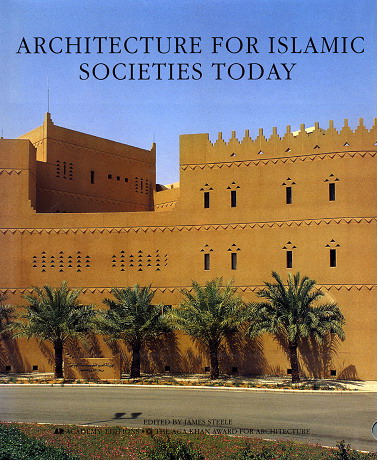
Architecture for Islamic Societies Today


Architecture for Islamic Societies Today
Academy Group Ltd | 1994 | English | 154 Pages | 53MB | PDF

Since the Aga Khan Award for Architecture was begun in 1977 it has been in the forefront of recognising the full impact of social and environmental upheaval on the built environment in Third World countries. In this volume the jury's selection for the fourth cycle of the awards is presented. The selected projects, which deal with issues pertinent to both the developing and developed world, demonstrate their timeless relevance. The visionary philosophy behind the awards has been to seek to encourage architects, builders, clients and users to learn from and add to the Muslim heritage. The idea has not been to compete with the established scholarship of Islamic culture but to reflect on the continuous relevance of the contemporary expressions of Islam as a religion, culture and civilization.


Tuesday, July 16, 2013

Architectural Philosophy


Architectural Philosophy
Andrew Benjamin
Athlone Press
 

Architectural Philosophy is the first book to outline a philosophical account of architecture and to establish the singularity of architectural practice and theory. This dazzling sequence of essays opens out the subject of architecture, touching on issues as wide ranging as the problem of memory and the dystopias of science fiction. Arguing for the indissolubility of form and function, Architectural Philosophy explores both the definition of the site and the possibility of alterity. The analysis of the nature of the present and the complex sructure of repetition allows for the possibility of judgement, a judgement that arises from a reworked politics of architecture.