Showing posts with label concrete. Show all posts

Sunday, August 5, 2018

Failed Stone: Problems and Solutions with Concrete and Masonry


Failed Stone: Problems and Solutions with Concrete and Masonry
159 pages | PDF | 20,5 MB

Concrete and stone seem made to last forever. But the fact is they develop structural damage over time. While not always as dramatic as the collapse of a roof section at the Paris Charles de Gaulle airport in 2004, gradual changes also occur that may compromise a building's appearance and structure. These changes include efflorescence, thermal stress, material incompatibilities, corrosion, and impact. Failed Stone systematically analyzes cases of damage in contemporary international architecture and offers strategies for minimizing the risk of damage. Examples include such high-visibility structures as Finlandia Hall in Helsinki by Alvar Aalto, Renzo Piano's Parco della Musica in Rome, and the National Museum of the American Indian in Washington. In nine chapters, typical kinds of damage are explained and illustrated with real-world examples.


Thursday, March 29, 2018

Friday, October 21, 2016

Tuesday, October 22, 2013

Worked Examples for the Design of Concrete Buildings


Worked Examples for the Design of Concrete Buildings
British Cement Association | 1994 | 256 pages | PDF | 5.84 MB


The Art of Precast Concrete - Colour, Texture, Expression


The Art of Precast Concrete - Colour, Texture, Expression
By David Bennett
Birkhäuser Basel | 2007 | 160 pages | PDF | 22 Mb

As a building material, precast concrete allows a wide range of sculptural forms and design options. By treating the surface in various ways, fascinating textures and fine finishes can be produced. This book provides a systematic overview of the variety of applications for such concrete elements throughout Europe. Author David Bennett provides in-depth information on newly developed, especially lightweight forms of concrete such as GRC (Glass-Fibre Reinforced Concrete), Ductal and CRC (Compact Reinforced Composite). A selection of some 24 projects which are of particular significance, are documented in detail and provide a wealth of inspiring design ideas. The appendix comprises an overview of the building practices in the individual European countries and the availability of concrete elements. Amongst the buildings documented are the Scottish Parliament Building in Edinburgh by Enric Miralles Benedetta Tagliabue, the Synagogue in Dresden by Wandel, Hoefer, Lorch + Hirsch, and the Mexican Embassy in Berlin by González de León.


Sunday, October 13, 2013

Concrete and Masonry Databook


Concrete and Masonry Databook
Christine Beall
Rochelle  Jaffe

Concise answers to all your questions about concrete and masonry

It's all here: the concrete and masonry information you need to work more efficiently, avoid costly problems and mistakes, minimize risk, reduce waste...and maximize profits! Industry experts Christine Beall and Rochelle Jaffe save you countless hours of searching through dozens of manuals or esoteric pamphlets, presenting the data in a quick-find, straightforward, heavily illustrated format. You get fingertip access to valuable practice tools and job-simplifying material, including more than 1000 tables, charts, graphs, and line drawings…guidance on thermal, fire, and weather resistance…current ASTM, ACI, and TMS standards…UBC, MSJC, and IBC code requirements…essential concrete and masonry data…listings of industry standards.

You can count on thorough, detailed coverage of key topics, including: products and materials; mortar, grout, and concrete mixes; form work and reinforcements; site and landscape elements; wall and floor systems; and much more. Invaluable for those working in both the commercial and residential markets, here is the single definitive volume on concrete and masonry.

Building Construction Illustrated, 2nd Edition


Building Construction Illustrated, 2nd Edition
Francis D. K. Ching , Cassandra Adams,

This classic title has been completely revised and now incorporates new information on concrete, steel and glazing technology; energy efficiency in buildings; moisture and thermal protection; natural lighting; masonry; and other topics. The organization of the text is according to a building's major components and systems. Presents material and structural choices available to the designer, how these choices affect a building's form and dimensions, and its relationship to its site.


Tuesday, September 3, 2013

Green Building with Concrete : Sustainable Design and Construction


Green Building with Concrete : Sustainable Design and Construction
Gajanan M. Sabnis, 
2012 |  | 336 pages | PDF | 3 MB

With superior fire resistance, strength, and a long service life, concrete is the most widely used construction material in the world. A sustainable material, concrete is also easily and affordably reused and rehabilitated. The first book to provide an overview of sustainability and concrete, Green Building with Concrete: Sustainable Design and Construction surveys the material’s history in the green building movement and presents state-of-the-art methodologies and best practices. 

From the manufacturing of cement to the rehabilitation of concrete, this comprehensive book explains how concrete can be used for sustainable design and construction. It offers insight into new technological and social developments guiding the introduction of green buildings and examines the attributes that concrete has to offer the green building movement. The text also highlights research on economic analysis—particularly life cycle costing—to provide a full picture of the economic benefits of concrete. Expert contributors from around the world offer diverse viewpoints on global sustainability.

Topics covered include:

  • Principles of sustainable design
  • Benefits of concrete’s thermal mass
  • Mitigation of urban heat island effects
  • Surface runoff and the application of pervious concrete for sidewalks and parking areas
  • Reduction of construction waste
  • Leadership in energy and environmental design (LEED) standards

Emphasizing environmental impact and occupational and consumer health and safety, this book explains how to make the most of concrete in sustainable design. Written for university and concrete industry continuing education courses, it also serves as a reference for building owners and industry professionals who recognize the value of green building.

Monday, July 1, 2013

Advanced Concrete Technology


Advanced Concrete Technology
Zongjin Li, 
2011 |  | 528 pages | PDF | 8 MB

A detailed and in-depth guide on current state-of-the-art concrete technologies

The most common building material used around the world, concrete has enjoyed a renewed level of research and testing in the past two decades. Through the use of various additives, production techniques, and chemical processes, there is now a great degree of control over the properties of specific concretes for a wide range of applications.

The first book of its kind to focus on advanced, state-of-the-art concrete technologies, Advanced Concrete Technology serves as a practical primer on concrete's important role in infrastructure and private building construction, as well as a handy reference for building professionals seeking better understanding of its basic behaviors and continued maturation through scientific enhancement. This book includes:

An insightful view of the latest developments advancing concrete technologies through coverage of new theories, models, and testing techniques

Coverage of non-Portland cement concrete such as geopolymer concrete, magnesium-based bonded concrete, and more

Examination of the newest nondestructive testing methods

Emphasizes a materials design philosophy based on the final application of the materials

Advanced Concrete Technology aims to bridge the gap between the traditional concrete technologies and the emerging cutting-edge technologies that are refining perspectives on concrete as not only an invaluable and fundamental building material, but a versatile one as well.

Cover image is of the Three Gorges Dam located in the Yiling District of Yichang, in Hubei province, China, which is the world's largest dam. Constructed of 28 million cubic meters of concrete, it is 185 meters high and 3035 meters long and with a capacity to generate over 22,500,000 kilowatts of electricity.


Friday, June 14, 2013

Construction Management and Design of Industrial Concrete and Steel Structures


Construction Management and Design of Industrial Concrete and Steel Structures
Mohamed A.El-Reedy,

The recent worldwide boom in industrial construction and the corresponding billions of dollars spent every year in industrial, oil, gas, and petrochemical and power generation project, has created fierce competition for these projects. Strong management and technical competence will bring your projects in on time and on budget. An in-depth exploration of both these aspects and the resulting challenges, Construction Management and Design of Industrial Concrete and Steel Structures provides a practical guide to the design of reinforced concrete and steel structures and foundations in industrial projects.

Renowned expert Mohamed A. El-Reedy covers the entire industrial construction process, from project management to design and construction to sigh off and providing a maintenance plan. Highlighting the differences between industrial construction and real estate or residential construction, he examines every phase and every role, from managerial to technical. He includes cases from industrial projects and covers the international technical practices, codes, and standards used in steel or concrete onshore or offshore projects. The book provides up-to-date methodologies in structure analysis, geotechnical studies, and international special codes and standards for industrial structures such as tanks, foundation under towers, machines, and special structures in industrial projects. It also examines the safety and economic benefits of developing a structure integrity management system.

When a project has a budget that seems as huge at the structure itself, the client, engineering firm, and contractor must work together to achieve success. Discussing the interface between these three main partners, this book outlines strategies for checking the design and controlling a project in all its phases.


Thursday, January 17, 2013

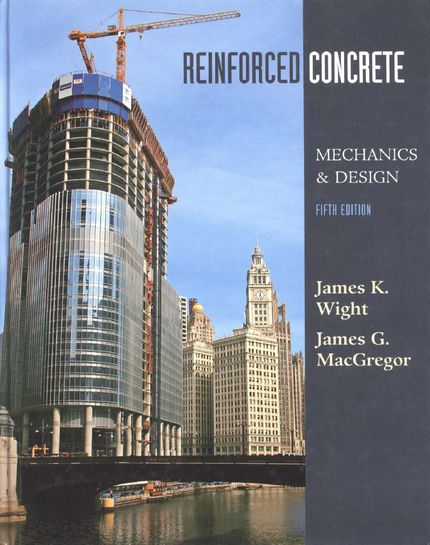
Reinforced Concrete : Mechanics and Design


Reinforced Concrete : Mechanics and Design (5th Edition) 
By James K. Wight, James G. MacGregor
Prentice Hall | English | 2008-06-27 | 1126 pages | PDF | 43 MB


This book explains the theory and practice of reinforced concrete design in a systematic and clear fashion with an abundance of step-by-step worked examples, illustrations, and photographs.
This book focuses on preparing readers to make the many judgment decisions required in reinforced concrete design. All chapters are in compliance with 2008 Edition of ACI Building Code. Coverage includes flexure, torsion, continuous beams, columns, two-way slabs, footing, walls, design for earthquake resistance, and more.

For professionals in the field who need a comprehensive reference on concrete structures and the design of reinforced concrete

Tuesday, January 15, 2013

Advanced Concrete Technology


Advanced Concrete Technology
Zongjin Li,
Wil y | 2011 | 528 pages | PDF | 8 MB

A detailed and in-depth guide on current state-of-the-art concrete technologies

The most common building material used around the world, concrete has enjoyed a renewed level of research and testing in the past two decades. Through the use of various additives, production techniques, and chemical processes, there is now a great degree of control over the properties of specific concretes for a wide range of applications.

The first book of its kind to focus on advanced, state-of-the-art concrete technologies, Advanced Concrete Technology serves as a practical primer on concrete's important role in infrastructure and private building construction, as well as a handy reference for building professionals seeking better understanding of its basic behaviors and continued maturation through scientific enhancement. This book includes:

An insightful view of the latest developments advancing concrete technologies through coverage of new theories, models, and testing techniques

Coverage of non-Portland cement concrete such as geopolymer concrete, magnesium-based bonded concrete, and more

Examination of the newest nondestructive testing methods

Emphasizes a materials design philosophy based on the final application of the materials

Advanced Concrete Technology aims to bridge the gap between the traditional concrete technologies and the emerging cutting-edge technologies that are refining perspectives on concrete as not only an invaluable and fundamental building material, but a versatile one as well.

Cover image is of the Three Gorges Dam located in the Yiling District of Yichang, in Hubei province, China, which is the world's largest dam. Constructed of 28 million cubic meters of concrete, it is 185 meters high and 3035 meters long and with a capacity to generate over 22,500,000 kilowatts of electricity.