Showing posts with label Structures. Show all posts

Monday, July 9, 2018

Bridges: The science and art of the world's most inspiring structures


Bridges: 
The science and art of the world's most inspiring structures
288 pages | PDF | 2,6 mb

Bridges vault valleys and leap rivers, but how? 

British civil-engineering professor Blockley answers in this “attempt to help nontechnical readers understand the technical issues bridge builders have to face.” 

Emanating from the engineer’s abiding anxiety to ensure against structural failure, such issues are successfully clarified in the author’s engaging presentation. 

Essentially, the bridge engineer calculates the physical forces acting on the materials and shapes used to construct a bridge, but, as Blockley iterates throughout, engineering knowledge about how a bridge will perform has finite or indeterminable dimensions.

 The bridge collapses he describes were typically caused by some previously unrecognized behavior, and the collection of behaviors learned through bridge-building experience infuses Blockley’s arrangement of bridges into four classifications—beams, arches, trusses, and suspensions.

 If we cross bridges unmindful of the forces they tame, Blockley’s text, sketches, simple equations, and photographs instill appreciation for a physical dynamism that the engineer aspires to control. 

Also discussing the architectural beauty of bridges, this is a model explanation of technological design for a general audience. --Gilbert Taylor


Thursday, May 10, 2018

Dynamics of Structures : Theory and Applications to Earthquake Engineering


Dynamics of Structures : 
Theory and Applications to Earthquake Engineering

Designed for senior-level and graduate courses in Dynamics of Structures and Earthquake Engineering.

Dynamics of Structures includes many topics encompassing the theory of structural dynamics and the application of this theory regarding earthquake analysis, response, and design of structures. 

No prior knowledge of structural dynamics is assumed and the manner of presentation is sufficiently detailed and integrated, to make the book suitable for self-study by students and professional engineers.
 

Sunday, March 25, 2018

Sunday, October 16, 2016

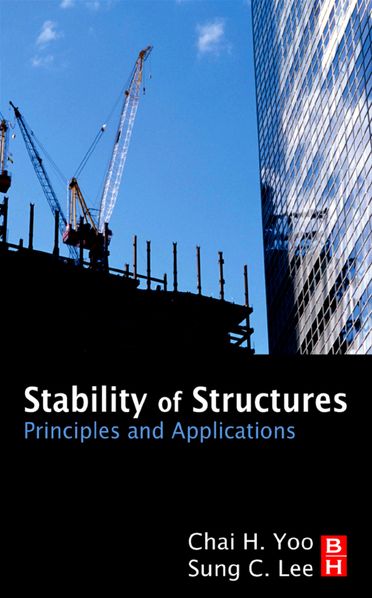
Stability of Structures


Stability of Structures :
Principles and Applications
2011 | 529 pages | PDF | 10,4 MB 


Wednesday, June 15, 2016

Friday, April 22, 2016

Advanced Materials and Techniques for Reinforced Concrete Structures


Advanced Materials and Techniques for Reinforced Concrete Structures 
Mohamed El-Reedy,
CRC | 2009 | 327 pages | PDF | 7,1 MB

A guidebook and handbook, this resource provides the information required for decision-making on structure systems, materials, construction methods, and maintenance plans. Filled with case studies, it delineates practical applications and up-to-date methods for designing and constructing buildings that are aesthetically pleasing and structurally sound.


Download

Tuesday, May 27, 2014

Advanced Materials and Techniques for Reinforced Concrete Structures


Advanced Materials and Techniques for Reinforced Concrete Structures
Mohamed El-Reedy,
CRC | 2009 | 327 pages | PDF | 7,1 MB

This presentation of modern and advanced technology in the reinforced concrete industries speaks to the rise and evolution of construction of reinforced concrete structures worldwide. Addressing the global focus on research into materials and techniques that enhance quality and reduce cost, this book examines all structural systems presently used worldwide on structures ranging from small buildings to high-rises. It refers to both British Standard (BS) and American specifications (ACI) to discuss the advantages and drawbacks of each system. In addition, it details new materials and cutting-edge construction methods, as well as advanced techniques to protect reinforced steel bars within concrete.

From China to Kuala Lumpur to Dubai to downtown New York, amazing buildings and unusual structures create attention with the uniqueness of their design. While attractive to developers and investors, the safe and economic design and construction of reinforced concrete buildings can sometimes be problematic. Advanced Materials and Techniques for Reinforced Concrete Structures discusses how to create safety and economy in design, construction, and maintenance operations plans. The author presents up-to-date data on advanced materials and techniques, exploring the advantages and disadvantages of different structure systems in durability, reliability, construction, and architectural requirements.

Highlighting the competitive nature of the business, the author delineates the statistical parameters that govern quality control in concrete construction projects, defining complicated statistical terms and the theoretical background needed for determining and meeting quality control criteria. He begins with a discussion of how to control the project to meet the owner’s requirements and includes coverage of the international codes for different loads that affect buildings. The book details traditional and emerging materials used in concrete technology such as high-strength, high-performance, and self-compacted concrete as well as those used in all construction stages for various climates. It concludes with a description of a risk-based maintenance plan for reinforced concrete structures.

A guidebook and handbook, this resource provides the information required for decision-making on structure systems, materials, construction methods, and maintenance plans. Filled with case studies, it delineates practical applications and up-to-date methods for designing and constructing buildings that are aesthetically pleasing and structurally sound.

Download:

Friday, May 16, 2014

Memotech Structures métalliques


Memotech Structures métalliques : 
(Du CAP au BTS filières structures Métalliques) Ingénieurs, architectes
Christophe Hazard, Frédy Lelong, Bruno Quinzain

S'appuyant sur les normes et représentations en vigueur, permet, grâce aux tableaux, formules et extraits de catalogues, de trouver des solutions constructives nécessaires à la conception et à la réalisation des ouvrages métalliques. L'édition 2009 met à jour la partie produits sidérurgiques : formes, dimensions, caractéristiques et la partie escaliers, garde-corps.

Wednesday, October 16, 2013

Dynamics of Structures : Theory and Applications to Earthquake Engineering


Dynamics of Structures : Theory and Applications to Earthquake Engineering
Anil K. Chopra

Designed for senior-level and graduate courses in Dynamics of Structures and Earthquake Engineering. 

Dynamics of Structures includes many topics encompassing the theory of structural dynamics and the application of this theory regarding earthquake analysis, response, and design of structures. No prior knowledge of structural dynamics is assumed and the manner of presentation is sufficiently detailed and integrated, to make the book suitable for self-study by students and professional engineers.


Dynamic Loading and Design of Structures


Dynamic Loading and Design of Structures
Andreas Kappos

Until now, information on the dynamic loading of structures has been widely scattered. No other book has examined the different types of loading in a comprehensive and systematic manner, and looked at their signficance in the design process. The book begins with a survey of the probabilistic background to all forms of loads, which is particularly important to dynamic loads, and then looks at the main types in turn: wind, earthquake, wave, blast and impact loading. The relevant code provisions (Eurocode and UBC American) are detailed and a number of examples are used to illustrate the principles. A final section covers the analysis for dynamic loading, drawing out the concepts underlying the treatment of all dynamic loads, and the corresponding modelling techniques. Throughout there is a focus on the modelling of structures, rather than on classical structural dynamics.


Monday, October 14, 2013

Design of Masonry Structures


Design of Masonry Structures, Third Edition 
of Load Bearing Brickwork Design.
"A.W.Hendry, B.P.Sinha and S.R.Davies"
279 pages.


Guide for the Design of Crane-Supporting Steel Structures


Guide for the Design of Crane-Supporting Steel Structures
R.A. MacCrimmon


Sunday, September 29, 2013

Building-Integrated Photovoltaic


Building-Integrated Photovoltaic
Designs for Commercial and Institutional Structures
A Sourcebook for Architects
Patrina Eiffert, Gregory J. Kiss


Sunday, July 21, 2013

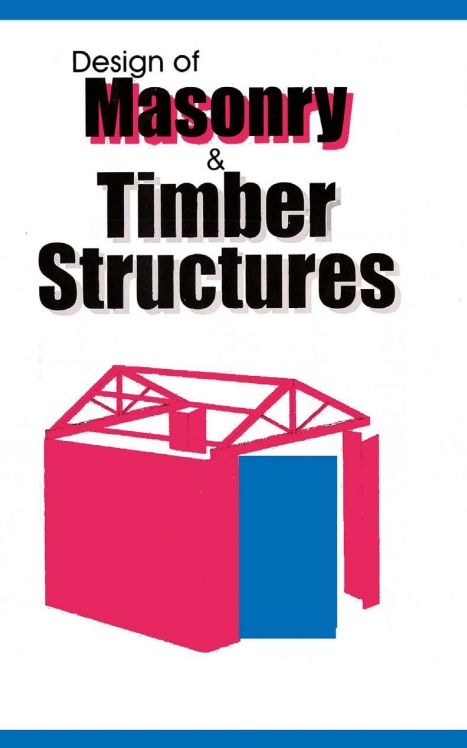
Design of Masonry and Timber Structures


Design of Masonry and Timber Structures
Harbhajan Singh,
Publisher: Year Of Publication | 2007 |  PDF | 151 pages | 4 MB

The book consists of Eight Chapters. Chapter 1 and 2 deal with Analysis and Design of Load Bearing Bricks Masonry Wall and Pillars and their foundations. Chapter 3 deals with Stability and Design of Bricks Masonry Retaining Walls subjected to different types of earth pressure including surcharge. Chapter 4 deals with requirements of Structural Timber and the Permissible Stresses in different grades of timber.