Showing posts with label Culture. Show all posts

Thursday, July 26, 2018

Detail Annual (vol. 4) Exhibit & Culture & Meeting, Education, Commerce, Public & Business facilities


Detail Annual (vol. 4) 
Exhibit & Culture & Meeting, Education, Commerce, Public & Business facilities
2005 | English, Korean | 257 pages | PDF | 79,4 MB


Detail Annual (vol. 1) Culture, business, residence, public facilities


Detail Annual (vol. 1) 
Culture, business, residence, public facilities
2005 | English, Korean | 265 pages | PDF | 105,5 MB


Thursday, June 7, 2018

White Papers, Black Marks: Architecture, Race, Culture


White Papers, Black Marks: 
Architecture, Race, Culture
 edition 2000 | PDF | 379 pages | 18,0 mb

Mapping the relationship between race and architecture, the authors of this volume explore the vexed if often unspoken ways in which notions of "difference" figure in the shaping of the built environment. 

The terms of architectural design and study-"space, site, form, architect, and user"-are derived from the historical task of adapting space to an existing socioeconomic structure. 

Exposing the racial subtext in this language of vision and logic, this book brings to light the complex connection between the question of identity and the questions architecture poses: Whose pleasures are pursued, who gets to build what, whose histories and experiences are represented, whose voice is heard?

Download : Oboom / Mega

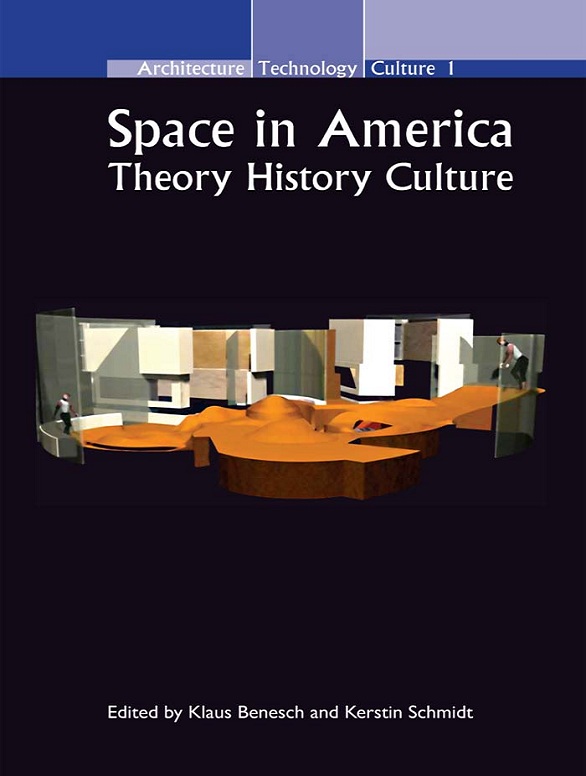
Space in America: Theory History Culture


Space in America: Theory History Culture
  2005 | 643 pages | PDF | 1,7 MB

Space in America Theory History Culture America's sense of space has always been tied to what Hayden White called the "narrativization" of real events. If the awe-inspiring manifestations of nature in America (Niagara Falls, Virginia's Natural Bridge, the Grand Canyon, etc.) were often used as a foil for projecting utopian visions and idealizations of the nation's exceptional place among the nations of the world, the rapid technological progress and its concomitant appropriation of natural spaces served equally well, as David Nye argues, to promote the dominant cultural idiom of exploration and conquest. 

From the beginning, American attitudes towards space were thus utterly contradictory if not paradoxical; a paradox that scholars tried to capture in such hybrid concepts as the "middle landscape" (Leo Marx), an "engineered New Earth" (Cecelia Tichi), or the "technological sublime" (David Nye).

Not only was America's concept of space paradoxical, it has always also been a contested terrain, a site of continuous social and cultural conflict. Many foundational issues in American history (the dislocation of Native and African Americans, the geo-political implications of nation-building, immigration and transmigration, the increasing division and "clustering" of contemporary American society, etc.) involve differing ideals and notions of space. 

Quite literally, space and its various ideological appropriations formed the arena where America's search for identity (national, political, cultural) has been staged. If American democracy, as Frederick Jackson Turner claimed, "is born of free land," then its history may well be defined as the history of the fierce struggles to gain and maintain power over both the geographical, social and political spaces of America and its concomitant narratives. 

The number and range of topics, interests, and critical approaches of the essays gathered here open up exciting new avenues of inquiry into the tangled, contentious relations of space in America. 

Topics include: Theories of Space ¯ Landscape / Nature ¯ Technoscape / Architecture / Urban Utopia ¯ Literature ¯ Performance / Film / Visual Arts


Wednesday, June 6, 2018

Memory Culture and the Contemporary City


Memory Culture and the Contemporary City
PDF | 264 pages | 2 MB

These essays by leading figures from academia, architecture and the arts consider how cultures of memory are constructed for and in contemporary cities. They take Berlin as a key case of a historically burdened metropolis, but also extend to other global cities: Jerusalem, Buenos Aires, Cape Town and New York.
 
Download : Oboom / mega

Thursday, April 12, 2018

Architecture as Experience : Radical Change in Spatial Practice


Architecture as Experience :
 Radical Change in Spatial Practice

Architecture as Experience investigates the perception and appropriation of places across intervals of time and culture. The particular concern of the volume is to bring together fresh empirical research and animate it through contact with theoretical sophistication, without overwhelming the material.

Download

Saturday, March 10, 2018

Tourists, Signs and the City


Tourists, Signs and the City
The Semiotics of Culture in an Urban Landscape

Download : Oboom / mega 

Friday, November 4, 2016

White Papers, Black Marks


White Papers, Black Marks :
Architecture, Race, Culture.
 2000 | PDF | 379 pages | 18,0 mb


Saturday, October 29, 2016

Tourists, Signs and the City


Tourists, Signs and the City
The Semiotics of Culture in an Urban Landscape


Thursday, September 29, 2016

Thursday, June 30, 2016

Building Community in Buildings


Building Community in Buildings :
 The Design and Culture of Dynamic Workplaces
2006 |  PDF | 224 pages | 5.81 MB


Sunday, July 21, 2013

Space in America : Theory History Culture


Space in America : Theory History Culture
Klaus Benesch; Kerstin Schmidt,
Editions Rodopi B.V. | 2005 | 643 pages | PDF | 1,7 MB

Space in America Theory History Culture America's sense of space has always been tied to what Hayden White called the "narrativization" of real events. If the awe-inspiring manifestations of nature in America (Niagara Falls, Virginia's Natural Bridge, the Grand Canyon, etc.) were often used as a foil for projecting utopian visions and idealizations of the nation's exceptional place among the nations of the world, the rapid technological progress and its concomitant appropriation of natural spaces served equally well, as David Nye argues, to promote the dominant cultural idiom of exploration and conquest. From the beginning, American attitudes towards space were thus utterly contradictory if not paradoxical; a paradox that scholars tried to capture in such hybrid concepts as the "middle landscape" (Leo Marx), an "engineered New Earth" (Cecelia Tichi), or the "technological sublime" (David Nye).Not only was America's concept of space paradoxical, it has always also been a contested terrain, a site of continuous social and cultural conflict. Many foundational issues in American history (the dislocation of Native and African Americans, the geo-political implications of nation-building, immigration and transmigration, the increasing division and "clustering" of contemporary American society, etc.) involve differing ideals and notions of space. Quite literally, space and its various ideological appropriations formed the arena where America's search for identity (national, political, cultural) has been staged. If American democracy, as Frederick Jackson Turner claimed, "is born of free land," then its history may well be defined as the history of the fierce struggles to gain and maintain power over both the geographical, social and political spaces of America and its concomitant narratives. The number and range of topics, interests, and critical approaches of the essays gathered here open up exciting new avenues of inquiry into the tangled, contentious relations of space in America. Topics include: Theories of Space ¯ Landscape / Nature ¯ Technoscape / Architecture / Urban Utopia ¯ Literature ¯ Performance / Film / Visual Arts


Wednesday, July 17, 2013

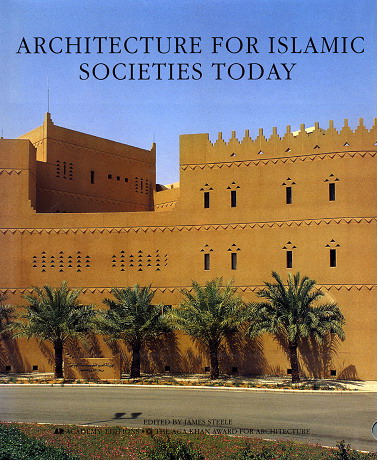
Architecture for Islamic Societies Today


Architecture for Islamic Societies Today
Academy Group Ltd | 1994 | English | 154 Pages | 53MB | PDF

Since the Aga Khan Award for Architecture was begun in 1977 it has been in the forefront of recognising the full impact of social and environmental upheaval on the built environment in Third World countries. In this volume the jury's selection for the fourth cycle of the awards is presented. The selected projects, which deal with issues pertinent to both the developing and developed world, demonstrate their timeless relevance. The visionary philosophy behind the awards has been to seek to encourage architects, builders, clients and users to learn from and add to the Muslim heritage. The idea has not been to compete with the established scholarship of Islamic culture but to reflect on the continuous relevance of the contemporary expressions of Islam as a religion, culture and civilization.


Monday, July 15, 2013

Building Community in Buildings


Building Community in Buildings: The Design and Culture of Dynamic Workplaces
Jana M. Kemp, Ken Baker -
Publisher: Praeger Publishers | 2006-11-30 |  PDF | 224 pages | 5.81 MB


 Building Community in Buildings takes us on a fascinating journey through workplaces large and small, old and new, traditional and contemporary, to explore the dynamic relationships between people and the structures in which they work. Consider that in the 1950s, average North Americans spent approximately 50 percent of their time in buildings, compared to a child born today, who will spend 90 percent of his or her life inside. Clearly and increasingly, our social and cultural relationships are deeply influenced by the physical spaces in which they are created. Jana Kemp and Ken Baker integrate insights from management and building design to reveal new understandings about workplace productivity and performance. Showcasing dozens of examples--from the redesign of the Hood River Library in Oregon (with input from front-line employees) to the creation of open, naturally-lit spaces in Lockheed Building 157 (increasing employee productivity by 15%), the authors highlight innovative practices that utilize space to promote creativity and collaboration, improve morale and motivation, and ensure employee health and safety. They also explore the pros and cons of virtual workplaces, in which people are connected electronically but not physically, and trace the impact and influences of such trends as the green building movement. Featuring over a dozen photographs, practical recommendations, and the tools to conduct a workplace design survey in your own organization, Building Community in Buildings ultimately demonstrates that by investing in spaces that support people needs, companies will strengthen bottom-line results.

Wednesday, June 12, 2013

White Papers, Black Marks : Architecture, Race, Culture


White Papers, Black Marks : Architecture, Race, Culture
by Lesley Naa Norle Lokko
Publisher: Univ Of Minnesota Press | edition 2000 | PDF | 379 pages | 18,0 mb

Mapping the relationship between race and architecture, the authors of this volume explore the vexed if often unspoken ways in which notions of "difference" figure in the shaping of the built environment. The terms of architectural design and study-"space, site, form, architect, and user"-are derived from the historical task of adapting space to an existing socioeconomic structure. Exposing the racial subtext in this language of vision and logic, this book brings to light the complex connection between the question of identity and the questions architecture poses: Whose pleasures are pursued, who gets to build what, whose histories and experiences are represented, whose voice is heard?

Tuesday, June 11, 2013

Memory Culture and the Contemporary City


Memory Culture and the Contemporary City
Uta Staiger, 
Publisher: P M.| 2009 |  | PDF | 264 pages | 2 MB

These essays by leading figures from academia, architecture and the arts consider how cultures of memory are constructed for and in contemporary cities. They take Berlin as a key case of a historically burdened metropolis, but also extend to other global cities: Jerusalem, Buenos Aires, Cape Town and New York.


Thursday, January 17, 2013

Memory Culture and the Contemporary City


Memory Culture and the Contemporary City
Uta Staiger,
Publisher: P M.| 2009 | PDF | 264 pages | 2 MB

These essays by leading figures from academia, architecture and the arts consider how cultures of memory are constructed for and in contemporary cities. They take Berlin as a key case of a historically burdened metropolis, but also extend to other global cities : Jerusalem, Buenos Aires, Cape Town and New York.


Sunday, January 6, 2013

White Papers, Black Marks : Architecture, Race, Culture


White Papers, Black Marks : Architecture, Race, Culture
by Lesley Naa Norle Lokko
Publisher: Univ Of Minnesota Press | edition 2000 | PDF | 379 pages | 18,0 mb

Mapping the relationship between race and architecture, the authors of this volume explore the vexed if often unspoken ways in which notions of "difference" figure in the shaping of the built environment. The terms of architectural design and study-"space, site, form, architect, and user"-are derived from the historical task of adapting space to an existing socioeconomic structure. Exposing the racial subtext in this language of vision and logic, this book brings to light the complex connection between the question of identity and the questions architecture poses: Whose pleasures are pursued, who gets to build what, whose histories and experiences are represented, whose voice is heard ?


Wednesday, March 2, 2011

Tracing Modernity: Manifestations of the Modern in Architecture and the City


"Tracing Modernity: Manifestations of the Modern in Architecture and the City"
Mari Hvattum
Routledge | English | July 14, 2004 | ISBN: 0415305128 | 360 pages | PDF | 10,3 MB

From the seventeenth century until today, the 'modern' has served as a key category by which to understand an ever-changing present. Art and architecture have played a key role in this pursuit, as the means by which 'the modern' was to manifest itself. The essays in this new anthology trace the modern project through its multifarious manifestation in order to understand contemporary culture in a deeper sense than discussions of 'modernism' and 'post modernism' usually offer. Drawng on architectural and urban history as well as philosophy and sociology, the book outlines the complex and conflicting roots of modernity by tracing its manifestations in architecture and the city. David Frisby, Iain Boyd Whyte, Caroline van Eck, Gabriele Bryant, Dalibor Vesely, Gavin Stamp, Mari Hvattum, Diana Periton, Tomas A. Markus, Detlef Mertins, Dagmar Weston, Jonathan Charley, Juliet Kin

megaupload
or
rapidshare

Monday, February 21, 2011

Detail Annual (vol. 4) Exhibit & Culture & Meeting, Education, Commerce, Public & Business facilities


"Detail Annual (vol. 4) Exhibit & Culture & Meeting, Education, Commerce, Public & Business facilities"
J.Kwang,
ARCHIWORLD | 2005 | English, Korean | ISBN: 895700812 | 257 pages | PDF | 79,4 MB

megaupload

rapidshare