Showing posts with label Art. Show all posts

Friday, September 21, 2018

Monday, September 10, 2018

Art, Space and the City


Art, Space and the City
280 Pages | PDF | 5 MB

Drawing on a wealth of images from across the UK, Europe and the USA, Malcom Miles questions the effectiveness of public art in achieving more convivial urban environments. Using a range of critical perspectives, Art, Space and the City assesses the issues relating to the public art and explains how these issues are just as relevant to architecture, urban design and urban planning. 


Thursday, August 23, 2018

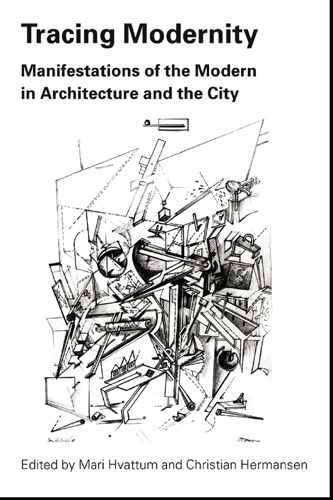
Tracing Modernity: Manifestations of the Modern in Architecture and the City


Tracing Modernity: 
Manifestations of the Modern in Architecture and the City
English |  2004 |360 pages | PDF | 10,3 MB

From the seventeenth century until today, the 'modern' has served as a key category by which to understand an ever-changing present. Art and architecture have played a key role in this pursuit, as the means by which 'the modern' was to manifest itself. The essays in this new anthology trace the modern project through its multifarious manifestation in order to understand contemporary culture in a deeper sense than discussions of 'modernism' and 'post modernism' usually offer. Drawing on architectural and urban history as well as philosophy and sociology, the book outlines the complex and conflicting roots of modernity by tracing its manifestations in architecture and the city. David Frisby, Iain Boyd Whyte, Caroline van Eck, Gabriele Bryant, Dalibor Vesely, Gavin Stamp, Mari Hvattum, Diana Periton, Tomas A. Markus, Detlef Mertins, Dagmar Weston, Jonathan Charley, Juliet Kin


Tuesday, June 26, 2018

Frank Gehry - MARTa Herford


Frank Gehry - MARTa Herford
English, German  | pages 112 | 2005

Located at the center of the German furniture manufacturing
industry, Marta, the latest European Museum by Frank O.
Gehry, opened in December 2004 to universal acclaim. 

Conceived
as a laboratory for redefining the relationship between art,
design, and industry, this Gehry masterwork houses art
galleries, a library, educational facilities, and conference
and cultural meeting rooms.

While the gallery is, for Gehry,
an uncharacteristic neutral white cube, it is wrapped in a
series of bulging curvatures creating a dome that announces
his distinctive architectural signature. 

This book, which
contains previously unpublished material on the design and
construction of the museum, offers insight into the working
process of arguably the world's most famous architect, and
his ideas about the shifting boundaries between industry,
design, art, and architecture.


Thursday, June 7, 2018

Writing Art and Architecture


Writing Art and Architecture
186 pages | PDF | 10,9 MB

In his new book, the eminent philosopher Andrew Benjamin turns his attention to architecture, design, sculpture, painting and writing. Drawing predominantly on a European tradition of modern philosophical criticism running from the German Romantics through Walter Benjamin and beyond, he offers a sequence of strong meditations on a diverse ensemble of works and themes: on the library and the house, on architectural theory, on Rachel Whiteread, Peter Eisenman, Anselm Kiefer, Peter Nielson, David Hawley, Terri Bird, Elizabeth Presa and others. 

In Benjamin's hands, criticism is bound up with judgment. Objects of criticism always become more than mere documents. These essays dissolve the prejudices that have determined our relation to aesthetic objects and to thought, releasing in their very care and attentiveness to the 'objects themselves' the unexpected potentialities such objects harbour. 

In his sensitivity to what he calls 'the particularity of material events', Benjamin's writing comes to exemplify new possibilities for the contemporary practice of criticism itself. These essays are a major contribution to critical thought about art and architecture today, and a genuine work of what Benjamin himself identifies as a 'materialist aesthetics'.
 
Download : Oboom / Mega

Wednesday, June 6, 2018

Memory Culture and the Contemporary City


Memory Culture and the Contemporary City
PDF | 264 pages | 2 MB

These essays by leading figures from academia, architecture and the arts consider how cultures of memory are constructed for and in contemporary cities. They take Berlin as a key case of a historically burdened metropolis, but also extend to other global cities: Jerusalem, Buenos Aires, Cape Town and New York.
 
Download : Oboom / mega

Monday, June 4, 2018

Deconstruction - Omnibus Volume


Deconstruction - Omnibus Volume

Deconstruction Omnibus Volume Deconstruction is One of the Most Talked about New Developments in art and architecture today. Neither a movement nor a fully-fledged style, Deconstruction is a major cultural phenomenon that is both a philosophical idiom and a critical methodology, and most recently the basis of an architectural aesthetic. 

Derived from the work of the French philosopher Jacques Derrida, Deconstruction is characterised by an essential distrust of the authenticity of apparent meaning and form and the traditional distinction between the two. 

Beginning with an investigation into the roots and sources of Deconstruction, this pioneer volume brings together Deconstructionist writings and projects from America, Britain, Europe and Japan. 

This omnibus volume, in addition to several specially commissioned articles, draws on issues of Architectural Design and Art & Design magazines as well as the proceedings of an international symposium at the Tate Gallery in London including an exclusive interview with Derrida himself. 

Four sections covering Constructivist Origins, Theory and Philosophy, and Deconstruction in Art and Architecture, edited by Andreas Papadakis, Andrew Benjamin and Catherine Cooke, present the work of the major writers, critics and practitioners of Deconstruction. 

These include Christopher Norris, Peter Eisenman, Bernard Tschumi, Zaha Hadid, Daniel Libeskind, OMA, Morphosis, Coop Himelblau, Charles Jencks, Hiromi Fujii, Geoff Bennington, Mark Wigley, Valerio Adami and many others. 

This book - the first to attempt to locate and define Deconstruction in architecture and the visual arts - explores the subject from a variety of viewpoints, some of which by their nature are experimental or speculative.


Download

Thursday, April 12, 2018

Art and Architecture in Medieval France


Art and Architecture in Medieval France
(Medieval Architecture, Sculpture, Stained Glass, Manuscripts, 
the Art of the Church Treasuries)
 1972 | PDF | 436 pages | 76 MB

This is an English-language study on the architecture and art of medieval France of the Romanesque and Gothic periods, approximately 1000 - 1500. In addition to essays on individual monuments there are general discussions of given periods and specific problems such as: why did Gothic come into being? Whitney Stoddard explores the interrelationship between all forms of medieval ecclesiastical art and characterization of the Gothic cathedral, which he believes to have an almost metaphysical basis.


Friday, November 4, 2016

Writing Art and Architecture


Writing Art and Architecture
Andrew Benjamin, 
2010 |  | 186 pages | PDF | 10,9 MB

In his new book, the eminent philosopher Andrew Benjamin turns his attention to architecture, design, sculpture, painting and writing. Drawing predominantly on a European tradition of modern philosophical criticism running from the German Romantics through Walter Benjamin and beyond, he offers a sequence of strong meditations on a diverse ensemble of works and themes: on the library and the house, on architectural theory, on Rachel Whiteread, Peter Eisenman, Anselm Kiefer, Peter Nielson, David Hawley, Terri Bird, Elizabeth Presa and others. In Benjamin's hands, criticism is bound up with judgment. Objects of criticism always become more than mere documents. These essays dissolve the prejudices that have determined our relation to aesthetic objects and to thought, releasing in their very care and attentiveness to the 'objects themselves' the unexpected potentialities such objects harbour. In his sensitivity to what he calls 'the particularity of material events', Benjamin's writing comes to exemplify new possibilities for the contemporary practice of criticism itself. These essays are a major contribution to critical thought about art and architecture today, and a genuine work of what Benjamin himself identifies as a 'materialist aesthetics'.


Thursday, September 29, 2016

Mirror of the World : A New History of Art


Mirror of the World : A New History of Art
2007 |  | PDF | 496 pages | 6.2 MB

Sunday, September 25, 2016

Monday, September 14, 2015

Friday, December 20, 2013

Deconstruction - Omnibus Volume


Deconstruction - Omnibus Volume
Andreas Papadakis

Deconstruction Omnibus Volume Deconstruction is One of the Most Talked about New Developments in art and architecture today. Neither a movement nor a fully-fledged style, Deconstruction is a major cultural phenomenon that is both a philosophical idiom and a critical methodology, and most recently the basis of an architectural aesthetic. Derived from the work of the French philosopher Jacques Derrida, Deconstruction is characterised by an essential distrust of the authenticity of apparent meaning and form and the traditional distinction between the two. Beginning with an investigation into the roots and sources of Deconstruction, this pioneer volume brings together Deconstructionist writings and projects from America, Britain, Europe and Japan. This omnibus volume, in addition to several specially commissioned articles, draws on issues of Architectural Design and Art & Design magazines as well as the proceedings of an international symposium at the Tate Gallery in London including an exclusive interview with Derrida himself. Four sections covering Constructivist Origins, Theory and Philosophy, and Deconstruction in Art and Architecture, edited by Andreas Papadakis, Andrew Benjamin and Catherine Cooke, present the work of the major writers, critics and practitioners of Deconstruction. These include Christopher Norris, Peter Eisenman, Bernard Tschumi, Zaha Hadid, Daniel Libeskind, OMA, Morphosis, Coop Himelblau, Charles Jencks, Hiromi Fujii, Geoff Bennington, Mark Wigley, Valerio Adami and many others. This book - the first to attempt to locate and define Deconstruction in architecture and the visual arts - explores the subject from a variety of viewpoints, some of which by their nature are experimental or speculative.


Friday, September 20, 2013

Drawing the Human Head


Drawing the Human Head
by Burne Hogarth

In 300 extraordinary drawings, Hogarth shows how to draw the head from every angle, age the face from infancy to old age, and delineate every feature and wrinkle.


Friday, July 19, 2013

Art and Architecture in Medieval France


Art and Architecture in Medieval France: 
Medieval Architecture, Sculpture, Stained Glass, Manuscripts, the Art of the Church Treasuries (Icon Editions No 22)
Harper and Row | 1972 | PDF | 436 pages | 76 MB

This is an English-language study on the architecture and art of medieval France of the Romanesque and Gothic periods, approximately 1000 - 1500. In addition to essays on individual monuments there are general discussions of given periods and specific problems such as: why did Gothic come into being? Whitney Stoddard explores the interrelationship between all forms of medieval ecclesiastical art and characterization of the Gothic cathedral, which he believes to have an almost metaphysical basis.


Saturday, July 13, 2013

UNSW Campus


UNSW Campus
A Guide to Its Architecture, Landscape and Public Art  
D Luscombe

The popular misconception is that the UNSW Kensington campus has nothing to offer in terms of architectural interest. However, over the past six years the campus has been extensively redeveloped and several award-winning new buildings have been erected. - Most recent among these is The Scientia, which was built to commemorate the university's 50th anniversary in 1999, and which has just been awarded the Sulman Award by the Royal Australian Institute of Architecture (NSW Chapter). - In the same ceremony, UNSW also won the Lloyd Rees Award for civic design for the redevelopment of the Kensington campus and the Institute of Languages Building at the Randwick campus won a commendation in the Environment/EED & ESD Architecture Award. - Other important developments in recent times include the award-winning Quadrangle building, and the University Mall, designed as a focal point for the campus community. - All important buildings, gardens and public art on the Kensington campus are profiled, with details of the buildings' inception, architects and important features.

Friday, June 14, 2013

Watercolorist's Guide to Painting Buildings


Watercolorist's Guide to Painting Buildings
Richard Taylor, 
David & Charles | 2000 | | 128 pages | PDF | 19,3 MB

Buildings-old and new, ornate or simple-provide an endlessly intriguing subject for watercolorists. Author and artist Richard Taylor gives you all the techniques for capturing perspective, proportion, light and shade, detail and texture. After deciding on the right materials, try your hand at everything from sheds and shacks to classical architecture with formal designs, arches, and elegant frontage. Capture the weathered appeal of a crumbling, ruined boatyard; by using lots of water, and downward vertical strokes with the brush, all the dramatic effects of ageing emerge on the paper. Stone steps leading up to a quiet Mediterranean courtyard shine in dappled light and warm shadows-deep in the interior, leafy branches, potted plants, windows, and a statue catch the eye. Or, paint quadrangles, cloisters; terraced homes, town houses, and street life. Throughout, 120 paintings in various stages of completion, show the effects of color, shadowing, and balance. A Selection of F&W's Book Clubs.