
Showing posts with label Rethinking. Show all posts

Tuesday, November 6, 2018

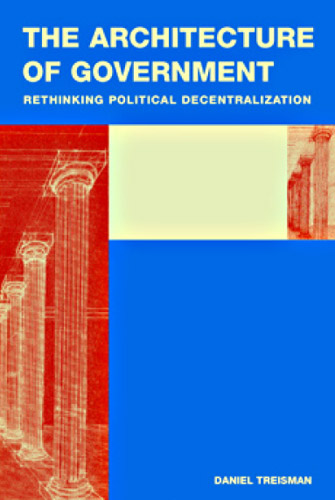
The Architecture of Government: Rethinking Political Decentralization


The Architecture of Government: Rethinking Political Decentralization
 English | July 2, 2007 | 348 pages | PDF | 2 MB

Since the days of Montesquieu and Jefferson, political decentralization has been seen as a force for better government and economic performance. It is thought to bring government 'closer to the people', nurture civic virtue, protect liberty, exploit local information, stimulate policy innovation, and alleviate ethnic tensions.

 Inspired by such arguments, and generously funded by the major development agencies, countries across the globe have been racing to devolve power to local governments. This book re-examines the arguments that underlie the modern faith in decentralization. 

Using logical analysis and formal modeling, and appealing to numerous examples, it shows that most are based on vague intuitions or partial views that do not withstand scrutiny. A review of empirical studies of decentralization finds these as inconclusive and mutually contradictory as the theories they set out to test.


Thursday, June 7, 2018

Rethinking Technology: A Reader in Architectural Theory


Rethinking Technology: A Reader in Architectural Theory
 488 pages | PDF | 3.1 MB

This essential reference for all students of architecture, design and the built environment provides a convenient single source for all the key texts in the recent literature on architecture and technology.

The book contains over fifty carefully selected essays, manifestoes, reflections and theories by architects and architectural writers from 1900 to 2004. 

This mapping out of a century of architectural technology reveals the discipline's long and close attention to the experience and effects of new technologies, and provides a broad picture of the shift from the 'age of tools' to the 'age of systems'.

Download : Oboom / Mega

Tuesday, April 10, 2018

Architecture Beyond Architecture


Architecture Beyond Architecture
English | 178 Pages | 51MB | PDF

This book presents the twelve projects premiated in the sixth cycle of the Aga Khan Award for Architecture. These awards are different from those given in preceding years, thus the book was a challenge from the start. In order to present what constitutes this new thinking about architecture and its content today, it was necessary to rethink the format and content of this book and its many audiences.
 

Tuesday, June 11, 2013

Rethinking Technology : A Reader in Architectural Theory


Rethinking Technology : A Reader in Architectural Theory
| February 23, 2007 |  | 488 pages | PDF | 3.1 MB

This essential reference for all students of architecture, design and the built environment provides a convenient single source for all the key texts in the recent literature on architecture and technology.The book contains over fifty carefully selected essays, manifestoes, reflections and theories by architects and architectural writers from 1900 to 2004. This mapping out of a century of architectural technology reveals the discipline's long and close attention to the experience and effects of new technologies, and provides a broad picture of the shift from the 'age of tools' to the 'age of systems'.


Friday, March 25, 2011

The Architecture of Government: Rethinking Political Decentralization


"The Architecture of Government: Rethinking Political Decentralization"
Daniel Treisman
Cambridge University Press | English | July 2, 2007 | ISBN: 0521872294 | 348 pages | PDF | 2 MB

Since the days of Montesquieu and Jefferson, political decentralization has been seen as a force for better government and economic performance. It is thought to bring government 'closer to the people', nurture civic virtue, protect liberty, exploit local information, stimulate policy innovation, and alleviate ethnic tensions. Inspired by such arguments, and generously funded by the major development agencies, countries across the globe have been racing to devolve power to local governments. This book re-examines the arguments that underlie the modern faith in decentralization. Using logical analysis and formal modeling, and appealing to numerous examples, it shows that most are based on vague intuitions or partial views that do not withstand scrutiny. A review of empirical studies of decentralization finds these as inconclusive and mutually contradictory as the theories they set out to test.

megaupload
or
rapidshare