Showing posts with label Built Environments. Show all posts

Thursday, November 8, 2018

The Meaning of the Built Environment: A Nonverbal Communication Approach


The Meaning of the Built Environment: 
A Nonverbal Communication Approach
Amos Rapoport,
1990 | PDF | 253 pages | 5 MB

"Rapoport is concerned with the meanings which buildings, their contents, and their inhabitants convey, and the conclusions which can be drawn therefrom for procedures of architectural design to satisfy the people who will ultimately live in these buildings. . . . A challenging book on a subject that has had insufficient attention in the past."—Man and Environment

"Fills a significant gap: it introduces the notion of environmental meaning so clearly that no reader will doubt the basic premise that the environment holds meaning as part of a cultural system of symbols, and influences our actions and our determinations of social order."—Design Book Review

"This is the second edition of a book first published in 1982. . . . Enthusiastic and inquiring as the reader is brought into the writer's thought processes."—Progress in Human Geography (England)

"It has merits not to be found in any other book in this much-discussed and little understood subject, to wit: it is short, it is simple, and it is useful. It is even, in parts, entertaining....a book which will help architects to do their job better." —Architecture Australia


Monday, June 18, 2018

The Access Manual: Auditing and Managing Inclusive Built Environments


The Access Manual:
 Auditing and Managing Inclusive Built Environments
Second Edition

 This manual covers the design, improvement, maintenance and management of accessible environments. As a building designer or manager, it will show you how to provide and run buildings, services, and employment facilities to enable independent and convenient use by everyone.

With its comprehensive information on standards, legislation and good practice, the manual will make sure you can:
 
  • be fully aware of the issues involved in accessibility
  • understand and commission access audits
  • create and manage an access improvement programme
  • maintain accessibility in buildings and working practices
  • respond effectively to the requirements of the Disability Discrimination Act.

Sunday, June 17, 2018

Managing quality in architecture


Managing quality in architecture :
A handbook for creators of the built environment
 PDF | 320 pages | 7.50 MB


This handbook addresses the question of how best to manage quality in architecture for the mutual benefit of design practices and their clients. Based on research from the last two decades, it explores the general principles, tools and techniques that can be adapted to the unique culture of any design practice.

The book addresses all aspects of quality in creating the built environment, with international contributions representing some of the best thinking that exists in design practice management. 

It is aimed at the entire design team - those who have a role in design inputs, design processes and design execution; including project managers, contractors, suppliers and clients. An accompanying website also provides commentary and updates on the text.

Topics are linked to relevant sections of the current quality standard, and the standard is interpreted as to its application to design practice. Practices interested in establishing an ISO 9001-compliant quality system will find all the tools they need.
The interpretation of quality is comprehensive.

Download : Oboom / Mega

Designing Better Buildings


Designing Better Buildings
 Quality and Value in the Built Environment

Design is widely recognised as the key to improving the quality of the built environment. 

This well-illustrated book comprises 15 chapters written by leading practitioners, clients, academics and other experts, and presents the latest thinking on what design quality is and how to achieve it. 

For design practitioners and their clients alike, the book provides evidence to justify greater focus on, and investment in, design. 

It summarises the benefits that arise from good design - such as, civic pride in the urban environment, the stimulation of urban regeneration, corporate identity, occupant productivity and health in offices, improved learning outcomes in schools, better patient recovery rates in hospitals, as well as reduced environmental impact. 

And it illustrates these benefits through case study examples. Eight chapters focus on case studies of exemplary buildings in particular sectors - offices, schools, housing, and hospitals - and explain why and how they came to be designed, and the design qualities they exhibit.
 

Thursday, June 7, 2018

Rethinking Technology: A Reader in Architectural Theory


Rethinking Technology: A Reader in Architectural Theory
 488 pages | PDF | 3.1 MB

This essential reference for all students of architecture, design and the built environment provides a convenient single source for all the key texts in the recent literature on architecture and technology.

The book contains over fifty carefully selected essays, manifestoes, reflections and theories by architects and architectural writers from 1900 to 2004. 

This mapping out of a century of architectural technology reveals the discipline's long and close attention to the experience and effects of new technologies, and provides a broad picture of the shift from the 'age of tools' to the 'age of systems'.

Download : Oboom / Mega

Tuesday, April 10, 2018

Architecture for Islamic Societies Today


Architecture for Islamic Societies Today
 English | 154 Pages | 53MB | PDF

Since the Aga Khan Award for Architecture was begun in 1977 it has been in the forefront of recognising the full impact of social and environmental upheaval on the built environment in Third World countries. In this volume the jury's selection for the fourth cycle of the awards is presented. The selected projects, which deal with issues pertinent to both the developing and developed world, demonstrate their timeless relevance. The visionary philosophy behind the awards has been to seek to encourage architects, builders, clients and users to learn from and add to the Muslim heritage. The idea has not been to compete with the established scholarship of Islamic culture but to reflect on the continuous relevance of the contemporary expressions of Islam as a religion, culture and civilization.


Download

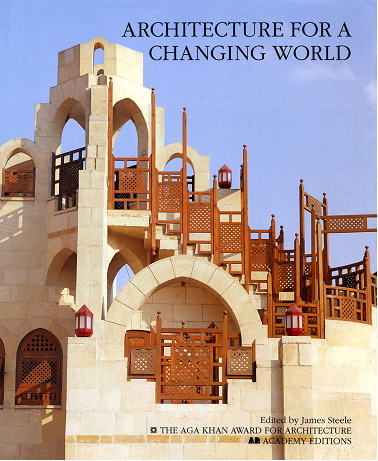
Architecture for A Changing World


Architecture for A Changing World
 English | 214 Pages | 102MB | PDF

It was the novel vision of His Highness the Aga Klian to contribute to the quality of the built environment by recognizing the achievements of the institutions and individuals whose efforts deserved to be encouraged and brought to the attention of a wider public as possible solutions to the continuing deterioration of the built environment. An important decision was to situate this endeavour within the realm of the architectural profession. Thus began a reciprocal and symbiotic relationship between the architectural profession in the Muslim World and the Award for Architecture, which has been continuously enriched since 1977.


Download

Monday, September 26, 2016

Managing quality in architecture


Managing quality in architecture : 
A handbook for creators of the built environment
PDF | 320 pages | 7.50 MB


Thursday, September 26, 2013

Designing Better Buildings : Quality and Value in the Built Environment


Designing Better Buildings
Quality and Value in the Built Environment
Edited by Sebastian Macmillan


Design is widely recognised as the key to improving the quality of the built environment. This well-illustrated book comprises 15 chapters written by leading practitioners, clients, academics and other experts, and presents the latest thinking on what design quality is and how to achieve it. For design practitioners and their clients alike, the book provides evidence to justify greater focus on, and investment in, design. It summarises the benefits that arise from good design - such as, civic pride in the urban environment, the stimulation of urban regeneration, corporate identity, occupant productivity and health in offices, improved learning outcomes in schools, better patient recovery rates in hospitals, as well as reduced environmental impact. And it illustrates these benefits through case study examples. Eight chapters focus on case studies of exemplary buildings in particular sectors - offices, schools, housing, and hospitals - and explain why and how they came to be designed, and the design qualities they exhibit.


Tuesday, September 24, 2013

The Access Manual : Auditing and Managing Inclusive Built Environments


The Access Manual : 
Auditing and Managing Inclusive Built Environments
Second Edition
Ann Sawyer, Keith Bright

This manual covers the design, improvement, maintenance and management of accessible environments. As a building designer or manager, it will show you how to provide and run buildings, services, and employment facilities to enable independent and convenient use by everyone. 

With its comprehensive information on standards, legislation and good practice, the manual will make sure you can: 
  • be fully aware of the issues involved in accessibility 
  • understand and commission access audits 
  • create and manage an access improvement programme 
  • maintain accessibility in buildings and working practices 
  • respond effectively to the requirements of the Disability Discrimination Act. 


Inclusive design is about people and their needs; The Access Manual shows you how to achieve an accessible, inclusive built environment that enables people to participate fully in all aspects of society.