Showing posts with label Applications. Show all posts

Sunday, May 27, 2018

Packed Tower Design and Applications


Packed Tower Design and Applications :
Random and Structured Packings
Second Edition  

During the last 25 years, significant changes have taken place in both the design of tower packings and the application of packed columns. Increasingly, concerns have turned from capacity to energy efficiency and the environmental impact of processing operations. 

This new edition has been retitled and updated throughout to reflect these changes and the expanded uses for structured packages. It provides basic information on the operation mechanism of packed columns, as well as practical methods for designing such columns, proven methods that have been used over the last decade to design columns as large as 46 feet in diameter and for separations requiring as many as 128 theoretical stages. 

The procedures presented are based on the author's practical experience acquired over 40 years, and have in many cases been developed as a result of real-life modifications. The numerous and varied major applications of packed columns are reviewed, so that their advantages as compared to other mass transfer devices can be determined. 

Particular characteristics of a system that need to be considered to ensure successful column operation are discussed.
 
Download : oboom / Mega

Thursday, May 10, 2018

Dynamics of Structures : Theory and Applications to Earthquake Engineering


Dynamics of Structures : 
Theory and Applications to Earthquake Engineering

Designed for senior-level and graduate courses in Dynamics of Structures and Earthquake Engineering.

Dynamics of Structures includes many topics encompassing the theory of structural dynamics and the application of this theory regarding earthquake analysis, response, and design of structures. 

No prior knowledge of structural dynamics is assumed and the manner of presentation is sufficiently detailed and integrated, to make the book suitable for self-study by students and professional engineers.
 

Tuesday, April 3, 2018

Advanced Lighting Controls


Advanced Lighting Controls :
Energy Savings, Productivity, Technology And Applications
PDF | 315 pages | 12,5 mb

 Download : Oboom

Sunday, March 25, 2018

Sunday, October 16, 2016

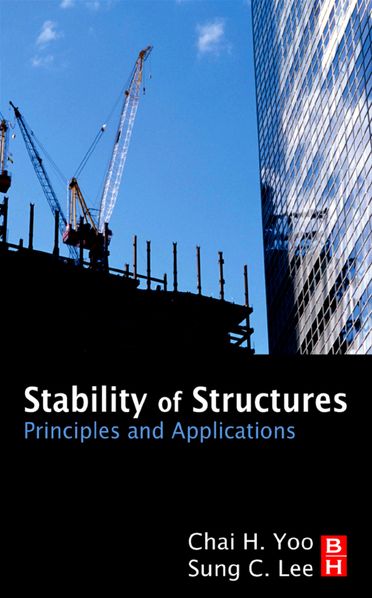
Stability of Structures


Stability of Structures :
Principles and Applications
2011 | 529 pages | PDF | 10,4 MB 


Monday, October 28, 2013

Visualization in Landscape and Environmental Planning


Visualization in Landscape and Environmental Planning :
Technology and Applications 
Edited by Ian D.Bishop and Eckart Lange

This major reference presents the challenges, issues and directions of computer-based visualisation of the natural and built environment and the role of such visualization in landscape and environmental planning. It offers uniquely a systematic approach to the potential of visualization and the writers are acknowledged experts in thier field of specialisation. Case studies are presented to illustrate many aspects of landscape management including forestry, agriculture, ecology, mining and urban development. 


Wednesday, October 16, 2013

Earthquake Engineering - Recent Advances and Applications


Earthquake Engineering - Recent Advances and Applications 
by Vitelmo V. Bertero , Yousef Bozorgnia
Publisher: CRC Press; 1 edition | 2004 | PDF | 1152 pages | 15,65 mb

It is a comprehensive collection, which will serve as a useful guide for instructors, graduate students and practicing engineers." - MCEER Information Service News, July/Aug. 2004 "This encyclopaedic volume edited by the two well-respected experts Vitelmo Bertero and Yousef Bozorgnia provides a wide ranging account of advances in earthquake engineering, The organization of the book is logical and well thought out.


Dynamics of Structures : Theory and Applications to Earthquake Engineering


Dynamics of Structures : Theory and Applications to Earthquake Engineering
Anil K. Chopra

Designed for senior-level and graduate courses in Dynamics of Structures and Earthquake Engineering. 

Dynamics of Structures includes many topics encompassing the theory of structural dynamics and the application of this theory regarding earthquake analysis, response, and design of structures. No prior knowledge of structural dynamics is assumed and the manner of presentation is sufficiently detailed and integrated, to make the book suitable for self-study by students and professional engineers.


Saturday, July 13, 2013

Advanced Lighting Controls : Energy Savings, Productivity, Technology And Applications


Advanced Lighting Controls : Energy Savings, Productivity, Technology And Applications
Publisher: Fairmont Pr | edition 2005 | PDF | 315 pages | 12,5 mb

Advanced Lighting Controls is edited by Craig DiLouie and written for engineers, architects, lighting designers, electrical contractors, distributors, and building owners and managers. Advanced lighting controls, indicated by research as the "next big thing," are now mandated by the ASHRAE/IES 91.1-1999 energy standard, the basis for all state energy codes in the U.S., and are becoming the norm rather than the exception in new construction. This book provides in-depth information about the major trends, technologies, codes, and design techniques shaping the use of today's lighting control systems, including dimming, automatic switching, and global as well as personal control.


Friday, July 5, 2013

Packed Tower Design and Applications : Random and Structured Packings


Packed Tower Design and Applications : Random and Structured Packings
Second Edition 
Ralph F., Jr. Strigle

During the last 25 years, significant changes have taken place in both the design of tower packings and the application of packed columns. Increasingly, concerns have turned from capacity to energy efficiency and the environmental impact of processing operations. This new edition has been retitled and updated throughout to reflect these changes and the expanded uses for structured packages. It provides basic information on the operation mechanism of packed columns, as well as practical methods for designing such columns, proven methods that have been used over the last decade to design columns as large as 46 feet in diameter and for separations requiring as many as 128 theoretical stages. The procedures presented are based on the author's practical experience acquired over 40 years, and have in many cases been developed as a result of real-life modifications. The numerous and varied major applications of packed columns are reviewed, so that their advantages as compared to other mass transfer devices can be determined. Particular characteristics of a system that need to be considered to ensure successful column operation are discussed.

Monday, July 1, 2013

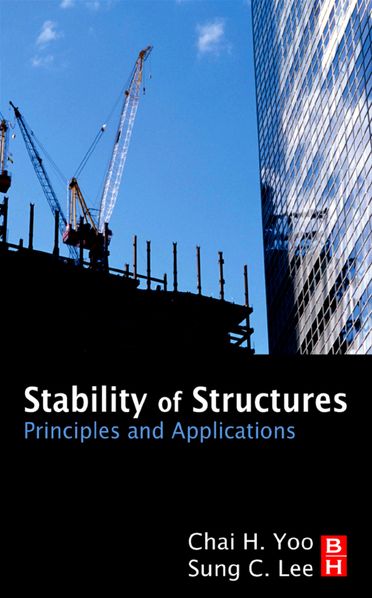
Stability of Structures : Principles and Applications


Stability of Structures : Principles and Applications
Chai H Yoo, Sung Lee, 
But worth-Heine ann | 2011 |  | 529 pages | PDF | 10,4 MB


The current trend of building more streamlined structures has made stability analysis a subject of extreme importance. It is mostly a safety issue because Stability loss could result in an unimaginable catastrophe. Written by two authors with a combined 80 years of professional and academic experience, the objective of Stability of Structures: Principles and Applications is to provide engineers and architects with a firm grasp of the fundamentals and principles that are essential to performing effective stability analysts.

Concise and readable, this guide presents stability analysis within the context of elementary nonlinear flexural analysis, providing a strong foundation for incorporating theory into everyday practice. The first chapter introduces the buckling of columns. It begins with the linear elastic theory and proceeds to include the effects of large deformations and inelastic behavior. In Chapter 2 various approximate methods are illustrated along with the fundamentals of energy methods. The chapter concludes by introducing several special topics, some advanced, that are useful in understanding the physical resistance mechanisms and consistent and rigorous mathematical analysis. Chapters 3 and 4 cover buckling of beam-columns. Chapter 5 presents torsion in structures in some detail, which is one of the least well understood subjects in the entire spectrum of structural mechanics. Strictly speaking, torsion itself does not belong to a topic in structural stability, but needs to be covered to some extent for a better understanding of buckling accompanied with torsional behavior. Chapters 6 and 7 consider stability of framed structures in conjunction with torsional behavior of structures. Chapters 8 to 10 consider buckling of plate elements, cylindrical shells, and general shells. Although the book is primarily devoted to analysis, rudimentary design aspects are discussed.
The accompanying website will include additional formulas and problems based on the author's on software which is currently being used in corporations. The website will also include equations and examples based on there personal experiences. In addition, the website will include a solutions manual for those who wish to use the book as a text book for a two-semester course. Engineers, Architects, designers, and researcher will find this print/website combination a valuable guide both in terms of its applications of verification of design of structures.
Key Features
• Balanced presentation for both theory and practice
• Well-blended contents covering elementary to advanced topics
• Detailed presentation of the development
• Computer programs will be made available through the senior author's web page

Friday, February 1, 2013

Packed Tower Design and Applications : Random and Structured Packings


Packed Tower Design and Applications : Random and Structured Packings 
Second Edition
Ralph F., Jr. Strigle

During the last 25 years, significant changes have taken place in both the design of tower packings and the application of packed columns. Increasingly, concerns have turned from capacity to energy efficiency and the environmental impact of processing operations. This new edition has been retitled and updated throughout to reflect these changes and the expanded uses for structured packages. It provides basic information on the operation mechanism of packed columns, as well as practical methods for designing such columns, proven methods that have been used over the last decade to design columns as large as 46 feet in diameter and for separations requiring as many as 128 theoretical stages. The procedures presented are based on the author's practical experience acquired over 40 years, and have in many cases been developed as a result of real-life modifications. The numerous and varied major applications of packed columns are reviewed, so that their advantages as compared to other mass transfer devices can be determined. Particular characteristics of a system that need to be considered to ensure successful column operation are discussed.


Friday, January 4, 2013

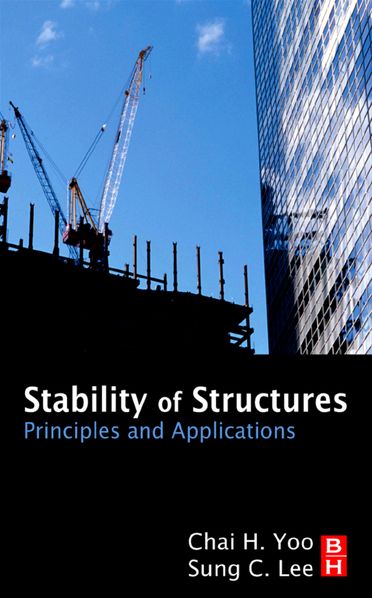
Stability of Structures : Principles and Applications


Stability of Structures : Principles and Applications
Chai H Yoo, Sung Lee,
But worth-Heine ann | 2011 | 529 pages | PDF | 10,4 MB

The current trend of building more streamlined structures has made stability analysis a subject of extreme importance. It is mostly a safety issue because Stability loss could result in an unimaginable catastrophe. Written by two authors with a combined 80 years of professional and academic experience, the objective of Stability of Structures: Principles and Applications is to provide engineers and architects with a firm grasp of the fundamentals and principles that are essential to performing effective stability analysts.

Concise and readable, this guide presents stability analysis within the context of elementary nonlinear flexural analysis, providing a strong foundation for incorporating theory into everyday practice. The first chapter introduces the buckling of columns. It begins with the linear elastic theory and proceeds to include the effects of large deformations and inelastic behavior. In Chapter 2 various approximate methods are illustrated along with the fundamentals of energy methods. The chapter concludes by introducing several special topics, some advanced, that are useful in understanding the physical resistance mechanisms and consistent and rigorous mathematical analysis. Chapters 3 and 4 cover buckling of beam-columns. Chapter 5 presents torsion in structures in some detail, which is one of the least well understood subjects in the entire spectrum of structural mechanics. Strictly speaking, torsion itself does not belong to a topic in structural stability, but needs to be covered to some extent for a better understanding of buckling accompanied with torsional behavior. Chapters 6 and 7 consider stability of framed structures in conjunction with torsional behavior of structures. Chapters 8 to 10 consider buckling of plate elements, cylindrical shells, and general shells. Although the book is primarily devoted to analysis, rudimentary design aspects are discussed.
The accompanying website will include additional formulas and problems based on the author's on software which is currently being used in corporations. The website will also include equations and examples based on there personal experiences. In addition, the website will include a solutions manual for those who wish to use the book as a text book for a two-semester course. Engineers, Architects, designers, and researcher will find this print/website combination a valuable guide both in terms of its applications of verification of design of structures.

Key Features
• Balanced presentation for both theory and practice
• Well-blended contents covering elementary to advanced topics
• Detailed presentation of the development
• Computer programs will be made available through the senior author's web page

Wednesday, December 7, 2011

Visualization in Landscape and Environmental Planning : Technology and Applications


Visualization in Landscape and Environmental Planning : Technology and Applications 
Edited by Ian D.Bishop and Eckart Lange | 5.47 Mb