Showing posts with label Concrete Structures. Show all posts

Wednesday, May 30, 2018

Structural Design for Architecture


Structural Design for Architecture

It is intended principally for use by students of architecture and will provide them with the information required to make sensible choices on the structural aspects of architectural design. 

The topics covered in the book include choice of structural
material, the determination of the form and geometry of structures, the integration of the structure with other aspects of architectural design and the preliminary allocation of dimensions to the principal structural elements. 

It is essentially a
non-mathematical treatment. Calculation procedures are reduced to the minimum compatible with achieving a meaningful approximation to the required member dimension.

Provides information which will be directly applicable to strategic decision making in relation to architectural form.

Deals with all basic types of structure in the four principal structural materials of steel, concrete, masonry and timber.

Comprehensively illustrated and presents information in a format which is readily accessible.
 

Thursday, March 29, 2018

Concrete and Masonry Databook


Concrete and Masonry Databook
 Concise answers to all your questions about concrete and masonry

Download : Oboom

Sunday, March 25, 2018

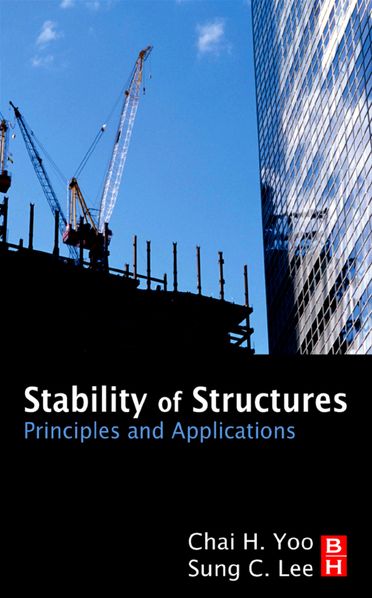
Stability of Structures: Principles and Applications


Stability of Structures: 
Principles and Applications
529 pages | PDF | 10,4 MB

Download : Oboom / mega

Reinforced Concrete : Mechanics and Design (5th Edition)


Reinforced Concrete : 
Mechanics and Design (5th Edition)
1126 pages | PDF | 43 MB
 
Download : Oboom / mega

Experiment and Calculation of Reinforced Concrete at Elevated Temperatures


Experiment and Calculation of Reinforced Concrete at Elevated Temperatures
336 pages | PDF | 15,3 MB

Concrete as a construction material goes through both physical and chemical changes under extreme elevated temperatures. As one of the most widely used building materials, it is important that both engineers and architects are able to understand and predict its behavior in under extreme heat conditions. Brief and readable, this book provides the tools and techniques to properly analysis the effects of high temperature of reinforced concrete which will lead to more stable, safer structures.
 
Download : Oboom / mega

Advanced Concrete Technology


Advanced Concrete Technology
528 pages | PDF | 8 MB

A detailed and in-depth guide on current state-of-the-art concrete technologies

Download : Oboom / mega

Design of Reinforced Concrete Structure ( 3 volumes )


 Design of Reinforced Concrete Structure


Friday, April 22, 2016

Advanced Materials and Techniques for Reinforced Concrete Structures


Advanced Materials and Techniques for Reinforced Concrete Structures 
Mohamed El-Reedy,
CRC | 2009 | 327 pages | PDF | 7,1 MB

A guidebook and handbook, this resource provides the information required for decision-making on structure systems, materials, construction methods, and maintenance plans. Filled with case studies, it delineates practical applications and up-to-date methods for designing and constructing buildings that are aesthetically pleasing and structurally sound.


Download

Tuesday, May 27, 2014

Advanced Materials and Techniques for Reinforced Concrete Structures


Advanced Materials and Techniques for Reinforced Concrete Structures
Mohamed El-Reedy,
CRC | 2009 | 327 pages | PDF | 7,1 MB

This presentation of modern and advanced technology in the reinforced concrete industries speaks to the rise and evolution of construction of reinforced concrete structures worldwide. Addressing the global focus on research into materials and techniques that enhance quality and reduce cost, this book examines all structural systems presently used worldwide on structures ranging from small buildings to high-rises. It refers to both British Standard (BS) and American specifications (ACI) to discuss the advantages and drawbacks of each system. In addition, it details new materials and cutting-edge construction methods, as well as advanced techniques to protect reinforced steel bars within concrete.

From China to Kuala Lumpur to Dubai to downtown New York, amazing buildings and unusual structures create attention with the uniqueness of their design. While attractive to developers and investors, the safe and economic design and construction of reinforced concrete buildings can sometimes be problematic. Advanced Materials and Techniques for Reinforced Concrete Structures discusses how to create safety and economy in design, construction, and maintenance operations plans. The author presents up-to-date data on advanced materials and techniques, exploring the advantages and disadvantages of different structure systems in durability, reliability, construction, and architectural requirements.

Highlighting the competitive nature of the business, the author delineates the statistical parameters that govern quality control in concrete construction projects, defining complicated statistical terms and the theoretical background needed for determining and meeting quality control criteria. He begins with a discussion of how to control the project to meet the owner’s requirements and includes coverage of the international codes for different loads that affect buildings. The book details traditional and emerging materials used in concrete technology such as high-strength, high-performance, and self-compacted concrete as well as those used in all construction stages for various climates. It concludes with a description of a risk-based maintenance plan for reinforced concrete structures.

A guidebook and handbook, this resource provides the information required for decision-making on structure systems, materials, construction methods, and maintenance plans. Filled with case studies, it delineates practical applications and up-to-date methods for designing and constructing buildings that are aesthetically pleasing and structurally sound.

Download:

Friday, June 14, 2013

Construction Management and Design of Industrial Concrete and Steel Structures


Construction Management and Design of Industrial Concrete and Steel Structures
Mohamed A.El-Reedy,

The recent worldwide boom in industrial construction and the corresponding billions of dollars spent every year in industrial, oil, gas, and petrochemical and power generation project, has created fierce competition for these projects. Strong management and technical competence will bring your projects in on time and on budget. An in-depth exploration of both these aspects and the resulting challenges, Construction Management and Design of Industrial Concrete and Steel Structures provides a practical guide to the design of reinforced concrete and steel structures and foundations in industrial projects.

Renowned expert Mohamed A. El-Reedy covers the entire industrial construction process, from project management to design and construction to sigh off and providing a maintenance plan. Highlighting the differences between industrial construction and real estate or residential construction, he examines every phase and every role, from managerial to technical. He includes cases from industrial projects and covers the international technical practices, codes, and standards used in steel or concrete onshore or offshore projects. The book provides up-to-date methodologies in structure analysis, geotechnical studies, and international special codes and standards for industrial structures such as tanks, foundation under towers, machines, and special structures in industrial projects. It also examines the safety and economic benefits of developing a structure integrity management system.

When a project has a budget that seems as huge at the structure itself, the client, engineering firm, and contractor must work together to achieve success. Discussing the interface between these three main partners, this book outlines strategies for checking the design and controlling a project in all its phases.


Thursday, January 17, 2013

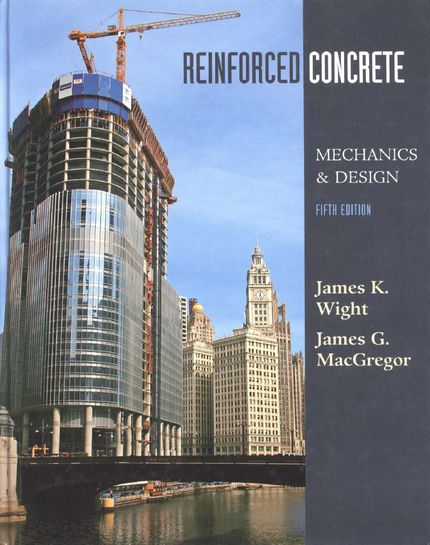
Reinforced Concrete : Mechanics and Design


Reinforced Concrete : Mechanics and Design (5th Edition) 
By James K. Wight, James G. MacGregor
Prentice Hall | English | 2008-06-27 | 1126 pages | PDF | 43 MB


This book explains the theory and practice of reinforced concrete design in a systematic and clear fashion with an abundance of step-by-step worked examples, illustrations, and photographs.
This book focuses on preparing readers to make the many judgment decisions required in reinforced concrete design. All chapters are in compliance with 2008 Edition of ACI Building Code. Coverage includes flexure, torsion, continuous beams, columns, two-way slabs, footing, walls, design for earthquake resistance, and more.

For professionals in the field who need a comprehensive reference on concrete structures and the design of reinforced concrete

Wednesday, January 16, 2013

Experiment and Calculation of Reinforced Concrete at Elevated Temperatures


Experiment and Calculation of Reinforced Concrete at Elevated Temperatures
Zhenhai Guo,
B,-H, | 2011 | 336 pages | PDF | 15,3 MB

Concrete as a construction material goes through both physical and chemical changes under extreme elevated temperatures. As one of the most widely used building materials, it is important that both engineers and architects are able to understand and predict its behavior in under extreme heat conditions. Brief and readable, this book provides the tools and techniques to properly analysis the effects of high temperature of reinforced concrete which will lead to more stable, safer structures.

Based on years of the author's research, Reinforced Concrete at Elevated Temperatures four part treatment starts with an unambiguous and thorough exposition of the mechanical behaviors of materials at elevated temperature followed by a discussion of Temperature field of member sections, Mechanical behaviors of members and structures at elevated temperature, ending with Theoretical analysis and practical calculation methods. The book provides unique insight into:
  • Coupling thermal-mechanical constitutive relation of concrete
  • Exceptional analyses of beams and columns of rectangular section with three surfaces and two adjacent surfaces exposing to high temperature
  • Measurement and analysis of redistribution of internal forces of statically indeterminate structure during heating-loading process
  • Finite element analysis and calculation charts for two-dimensional temperature field of structural members
  • Finite element analysis and simplified calculation method for reinforced concrete structure at elevated temperature


Tuesday, January 15, 2013

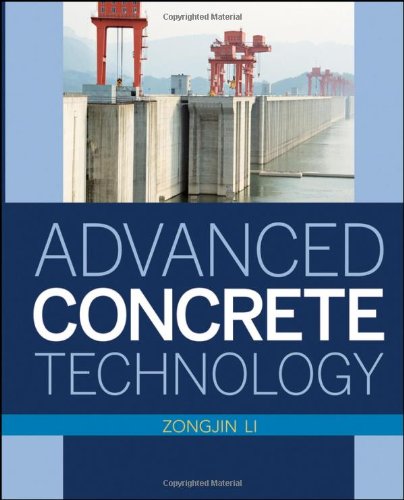
Advanced Concrete Technology


Advanced Concrete Technology
Zongjin Li,
Wil y | 2011 | 528 pages | PDF | 8 MB

A detailed and in-depth guide on current state-of-the-art concrete technologies

The most common building material used around the world, concrete has enjoyed a renewed level of research and testing in the past two decades. Through the use of various additives, production techniques, and chemical processes, there is now a great degree of control over the properties of specific concretes for a wide range of applications.

The first book of its kind to focus on advanced, state-of-the-art concrete technologies, Advanced Concrete Technology serves as a practical primer on concrete's important role in infrastructure and private building construction, as well as a handy reference for building professionals seeking better understanding of its basic behaviors and continued maturation through scientific enhancement. This book includes:

An insightful view of the latest developments advancing concrete technologies through coverage of new theories, models, and testing techniques

Coverage of non-Portland cement concrete such as geopolymer concrete, magnesium-based bonded concrete, and more

Examination of the newest nondestructive testing methods

Emphasizes a materials design philosophy based on the final application of the materials

Advanced Concrete Technology aims to bridge the gap between the traditional concrete technologies and the emerging cutting-edge technologies that are refining perspectives on concrete as not only an invaluable and fundamental building material, but a versatile one as well.

Cover image is of the Three Gorges Dam located in the Yiling District of Yichang, in Hubei province, China, which is the world's largest dam. Constructed of 28 million cubic meters of concrete, it is 185 meters high and 3035 meters long and with a capacity to generate over 22,500,000 kilowatts of electricity.


Tuesday, December 13, 2011

Structural Renovation in Concrete


Structural Renovation in Concrete
Zongjin Li, Christopher Leung, Yunping Xi
Taylor & Francis | English | 2009-03-12 | 354 pages | PDF | 7,7 MB