Showing posts with label Analysing. Show all posts

Monday, June 4, 2018

Analysing Architecture


Analysing Architecture

Clear and accessible, Analysing Architecture opens a fresh way to understanding architecture. It offers a unique ‘notebook’ of architectural strategies to present an engaging introduction to elements and concepts in architectural design. Beautifully illustrated throughout with the author’s original drawings, examples are drawn from across the world and many periods of architectural history (from prehistoric times to the recent past) to illustrate analytical themes and to show how drawing can be used to study architecture. Since its first edition appeared in 1997, Analysing Architecture has established itself internationally as one of the key texts in architectural education.

This third edition includes a new section discussing the ways analyzing examples cultivates a capacity for design. Original chapters have been expanded, new case studies added, and the format rearranged for additional clarity. The bibliography of recommended supplementary reading has also been extended.

In Analysing Architecture, Simon Unwin clearly identifies the key elements of architecture and conceptual themes apparent in buildings and relevant to other works of architecture such as gardens and cities. He describes ideas for use in the active process of design. Breaking down the grammar of architecture into themes and ‘moves’, Unwin exposes its underlying patterns to reveal the organizational strategies that lie beneath the superficial appearances of buildings.

Exploring buildings as results of the interaction of people with the world around them, Analysing Architecture offers a definition of architecture as ‘identification of place’ and provides a greater understanding of architecture as a creative discipline. This book presents a powerful impetus for readers to develop their own capacities for architectural design. It will also be of use to all those with an interest in the human occupation of and involvement with space – anthropologists, archaeologists, film-makers, installation artists, planners, urban designers, politicians.
 

Saturday, November 9, 2013

Analysing Architecture


Analysing Architecture
Simon Unwin
209 pages

Clear and accessible, Analysing Architecture opens a fresh way to understanding architecture. It offers a unique ‘notebook’ of architectural strategies to present an engaging introduction to elements and concepts in architectural design. Beautifully illustrated throughout with the author’s original drawings, examples are drawn from across the world and many periods of architectural history (from prehistoric times to the recent past) to illustrate analytical themes and to show how drawing can be used to study architecture. Since its first edition appeared in 1997, Analysing Architecture has established itself internationally as one of the key texts in architectural education.

This third edition includes a new section discussing the ways analyzing examples cultivates a capacity for design. Original chapters have been expanded, new case studies added, and the format rearranged for additional clarity. The bibliography of recommended supplementary reading has also been extended.

In Analysing Architecture, Simon Unwin clearly identifies the key elements of architecture and conceptual themes apparent in buildings and relevant to other works of architecture such as gardens and cities. He describes ideas for use in the active process of design. Breaking down the grammar of architecture into themes and ‘moves’, Unwin exposes its underlying patterns to reveal the organizational strategies that lie beneath the superficial appearances of buildings.

Exploring buildings as results of the interaction of people with the world around them, Analysing Architecture offers a definition of architecture as ‘identification of place’ and provides a greater understanding of architecture as a creative discipline. This book presents a powerful impetus for readers to develop their own capacities for architectural design. It will also be of use to all those with an interest in the human occupation of and involvement with space – anthropologists, archaeologists, film-makers, installation artists, planners, urban designers, politicians.


Friday, August 2, 2013

Residential Skin & Details


Residential Skin & Details
by Helen Liu
2013 | | English | 271 Pages | PDF | 28.30 MB

Residential Skin & Details provides analysis of both the technical and the aesthetic importance of details in modern residential architecture. Featuring the work of renowned architect from around the world, this book presents 32 of the most recently completed designs for residential architecture. Each project is presented with colour photographs, plans, sections and elevations, as well as numerous construction details. There is also a descriptive text, detailed captions and in-depth information for each project. Residential Skin & Details is an excellent reference work for practising architects as well as architecture and design students.


Friday, January 4, 2013

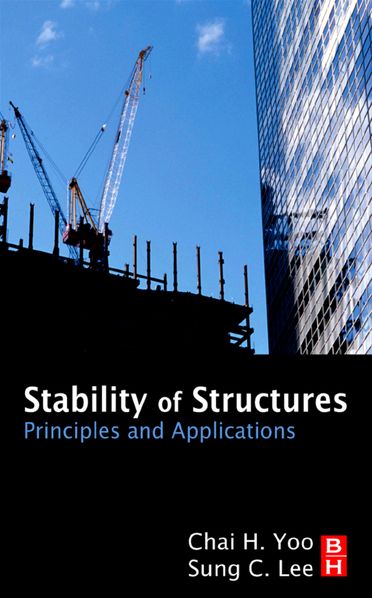
Stability of Structures : Principles and Applications


Stability of Structures : Principles and Applications
Chai H Yoo, Sung Lee,
But worth-Heine ann | 2011 | 529 pages | PDF | 10,4 MB

The current trend of building more streamlined structures has made stability analysis a subject of extreme importance. It is mostly a safety issue because Stability loss could result in an unimaginable catastrophe. Written by two authors with a combined 80 years of professional and academic experience, the objective of Stability of Structures: Principles and Applications is to provide engineers and architects with a firm grasp of the fundamentals and principles that are essential to performing effective stability analysts.

Concise and readable, this guide presents stability analysis within the context of elementary nonlinear flexural analysis, providing a strong foundation for incorporating theory into everyday practice. The first chapter introduces the buckling of columns. It begins with the linear elastic theory and proceeds to include the effects of large deformations and inelastic behavior. In Chapter 2 various approximate methods are illustrated along with the fundamentals of energy methods. The chapter concludes by introducing several special topics, some advanced, that are useful in understanding the physical resistance mechanisms and consistent and rigorous mathematical analysis. Chapters 3 and 4 cover buckling of beam-columns. Chapter 5 presents torsion in structures in some detail, which is one of the least well understood subjects in the entire spectrum of structural mechanics. Strictly speaking, torsion itself does not belong to a topic in structural stability, but needs to be covered to some extent for a better understanding of buckling accompanied with torsional behavior. Chapters 6 and 7 consider stability of framed structures in conjunction with torsional behavior of structures. Chapters 8 to 10 consider buckling of plate elements, cylindrical shells, and general shells. Although the book is primarily devoted to analysis, rudimentary design aspects are discussed.
The accompanying website will include additional formulas and problems based on the author's on software which is currently being used in corporations. The website will also include equations and examples based on there personal experiences. In addition, the website will include a solutions manual for those who wish to use the book as a text book for a two-semester course. Engineers, Architects, designers, and researcher will find this print/website combination a valuable guide both in terms of its applications of verification of design of structures.

Key Features
• Balanced presentation for both theory and practice
• Well-blended contents covering elementary to advanced topics
• Detailed presentation of the development
• Computer programs will be made available through the senior author's web page

Friday, May 18, 2012

Site Analysis: A Contextual Approach to Sustainable Land Planning and Site Design


Site Analysis: A Contextual Approach to Sustainable Land Planning and Site Design
James A. LaGro
Publication Date: November 9, 2007 | Edition: 2

Site analysis is the key to a well-designed project. In fact, the careful and complete analysis of a site and its surrounding context can lead to better development proposals, smoother design implementation, and, ultimately, higher quality built environments.

This carefully conceived book is the first to detail each crucial step in the site analysis and planning process, from site selection through design development. It shows how these activities are integrated to arrive at a site plan that successfully balances the needs of the client and other stakeholders with the site's suitability for the intended land uses. With more than 130 illustrations, this book includes many outstanding examples of maps and site plans created by leading land planning firms. It offers guidance on:

* Site identification, evaluation, and selection
* Site inventories of physical, biological, and cultural attributes
* Land use suitability analysis using Geographic Information Systems (GIS)
* Concept planning and design development
* Graphic communication with clients, government agencies, and other stakeholders

Filled with need-to-know information on the entire land planning and design process, Site Analysis is a vital addition to the library of students and professionals in landscape architecture, urban design and planning, and related areas.

???

Saturday, July 30, 2011

Principles of Foundation Engineering (7th SI Edition)


Principles of Foundation Engineering (7th SI Edition)
CL-Engineering | ISBN : 0495668125 | April 20, 2010 | 815 pages | PDF | 15MB


Originally published in the fall of 1983, Braja M. Das' Seventh Edition of Principles of Foundation Engineering continues to maintain the careful balance of current research and practical field applications that has made it the leading text in foundation engineering courses. Featuring a wealth of worked-out examples and figures that help students with theory and problem-solving skills, the book introduces civil engineering students to the fundamental concepts and application of foundation analysis design. Throughout, Das emphasizes the judgment needed to properly apply the theories and analysis to the evaluation of soils and foundation design as well as the need for field experience.


Saturday, March 26, 2011

Foundation Design: Theory and Practice


"Foundation Design: Theory and Practice"
N. S. V. Kameswara Rao,
Publisher: W////y | 2011 | ISBN: 0470825340 | PDF | 544 pages | 37.8 MB

In Foundation Design: Theory and Practice, Professor N. S. V. Kameswara Rao covers the key aspects of the subject, including principles of testing, interpretation, analysis, soil-structure interaction modeling, construction guidelines, and applications to rational design. Rao presents a wide array of numerical methods used in analyses so that readers can employ and adapt them on their own. Throughout the book the emphasis is on practical application, training readers in actual design procedures using the latest codes and standards in use throughout the world.

Foundation Design is designed for graduate students in civil engineering and geotechnical engineering. The book is also ideal for advanced undergraduate students, contractors, builders, developers, heavy machine manufacturers, and power plant engineers. Students in mechanical engineering will find the chapter on machine foundations helpful for structural engineering applications.

megaupload
or
rapidshare

Monday, March 14, 2011

Friday, July 3, 2009

Structural and Stress Analysis


Structural and Stress Analysis

by T. H. G. Megson
Butterworth-Heinemann | 2005-04-15 | 744 pages | PDF | 6,6 Mb

Structural analysis is the corner stone of civil engineering and all students must obtain a thorough understanding of the techniques available to analyse and predict stress in any structure.
The new edition of this popular textbook provides the student with a comprehensive introduction to all types of structural and stress analysis, starting from an explanation of the basic principles of statics, normal and shear force and bending moments and torsion. Building on the success of the first edition, new material on structural dynamics and finite element method has been included.
Virtually no prior knowledge of structures is assumed and students requiring an accessible and comprehensive insight into stress analysis will find no better book available.

* Comprehensive overview of structural and stress analysis
* Invaluable to undergraduate civil engineers
* Numerous worked examples and problems
* Solutions manual available online

Download :
http://rapidshare.com/files/249492090/Structural_and_Stress_Analysis.rar.html